
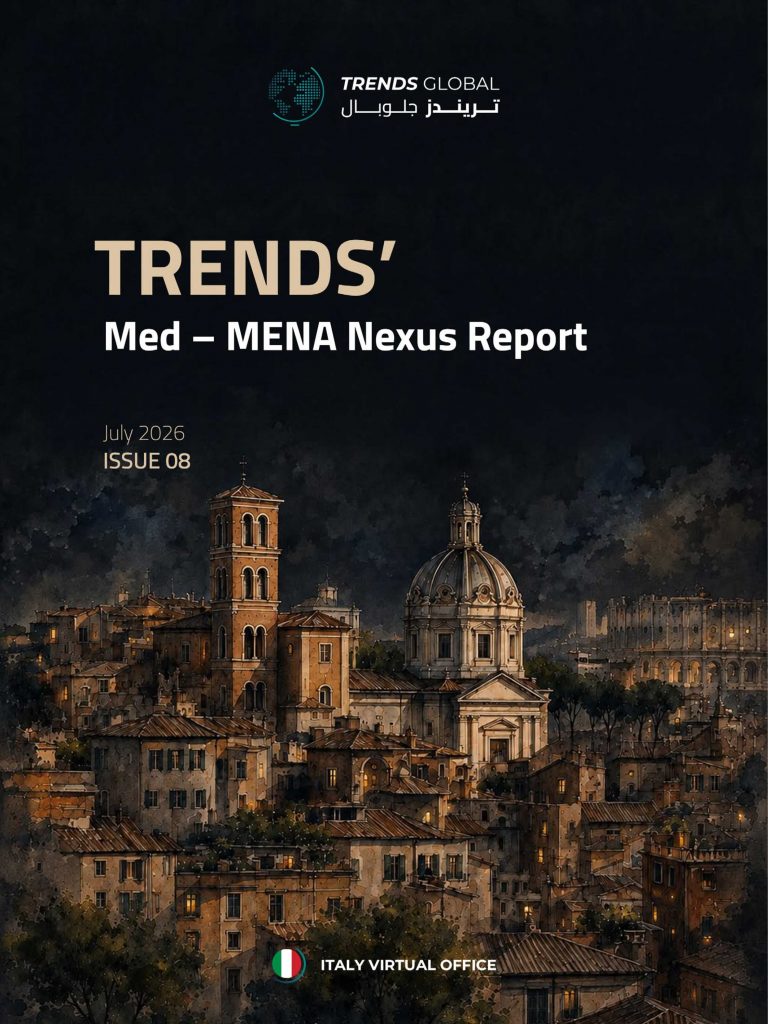
In the latest edition of the TRENDS Med-MENA Nexus Monthly Report, the esteemed analytical platform from TRENDS Research & Advisory delves into the evolving diplomatic and economic relationships connecting Italy, Southern Europe, the Mediterranean, and the Gulf states. The article, dated July 2026, highlights a notable shift in how these regions engage with one another, suggesting a growing departure from conventional bilateral relations in favor of broader strategic coalitions that span not only geography but also sectors of interest.
The Mediterranean basin, traditionally viewed as a crossroads of culture and commerce, is witnessing an increasingly multifaceted engagement where maritime routes and innovation converge. Notable developments underscore a heightened interconnectedness between European and Gulf priorities. From strategic maritime corridors such as the one linking the Strait of Hormuz to Bab el-Mandeb, to burgeoning investment partnerships that reach across the African continent, it is evident that shared interests are motivating these unprecedented collaborations. Italy, with its unique geographical position and historical ties, stands out as a vital player in this evolving landscape, actively participating in initiatives focused on maritime security, developmental finance, and critical technological advancements.
This month’s report meticulously examines three pivotal dimensions of this emergent strategic architecture.
First, the report investigates the increasing collaboration on maritime security. Initiatives such as the proposed Hormuz Coalition, the European Union Naval Forces (EUNAVFOR) ASPIDES, and a recently formed Saudi-led maritime alliance are indicative of a concerted effort to safeguard a vital strategic corridor that connects the Gulf region to the Red Sea. These collaborative frameworks represent a shared recognition among participating nations of the need for enhanced security measures, especially considering the critical role these waterways play in global trade and energy supply chains. The convergence of military and strategic interests in maritime domains serves to underline the importance of collective security arrangements that are set to impact regional stability.
Secondly, the evolving Mattei Plan represents another significant facet of this cooperative landscape, wherein the plan is gradually transforming into a catalyst for triangular cooperation. This initiative seeks to harmonize European resources with Gulf investments, aiming to address and prioritize development in Africa. This shift reflects not only a commitment to addressing global challenges such as poverty and underdevelopment but also represents a pragmatic approach to harnessing available resources for mutually beneficial outcomes. By facilitating this synergy, Italy is positioning itself as a crucial intermediary that can navigate complex geopolitical realities while advocating for sustainable development in neighboring regions.
Finally, the report highlights the emergence of a strategic technology partnership between Europe and the Gulf Cooperation Council (GCC). Recent collaborative efforts involving key players such as France, Italy, the United Arab Emirates (UAE), and Saudi Arabia have emphasized the increasing importance of sectors such as artificial intelligence (AI), computing infrastructure, energy sustainability, and technological independence. This partnership is poised to redefine economic interactions and enhance resiliency against global technological disruptions. As various nations fortify their technological bases and competencies, the establishment of strategic alliances in this domain could lead to rapid innovation cycles and an overarching boost in economic productivity.
As Italy and Gulf states collectively navigate this intricate geopolitical tapestry, the depth of their engagements signals a transformative era characterized by interconnectedness and shared priorities. The historical ties between these regions, coupled with modern imperatives, are establishing new pathways for collaboration that could shape the socio-economic and political landscapes of the twenty-first century.
As we reflect on the unfolding narrative presented in the TRENDS Med-MENA Nexus Monthly Report, it is clear that the interactions on the Mediterranean and Gulf fronts are not merely transactional; they are becoming increasingly informed by a strategic vision that transcends traditional diplomatic encore.
In summary, the evolving interplay between Italy, the Mediterranean, and the Gulf captures the essence of modern geopolitical dynamics, where cooperation and collective security strategies are paramount. This multifaceted relationship is not only vital for regional stability but is also pivotal in addressing broader global challenges.
#BusinessNews #EconomyNews #Italy #GulfCooperation #StrategicRelations