
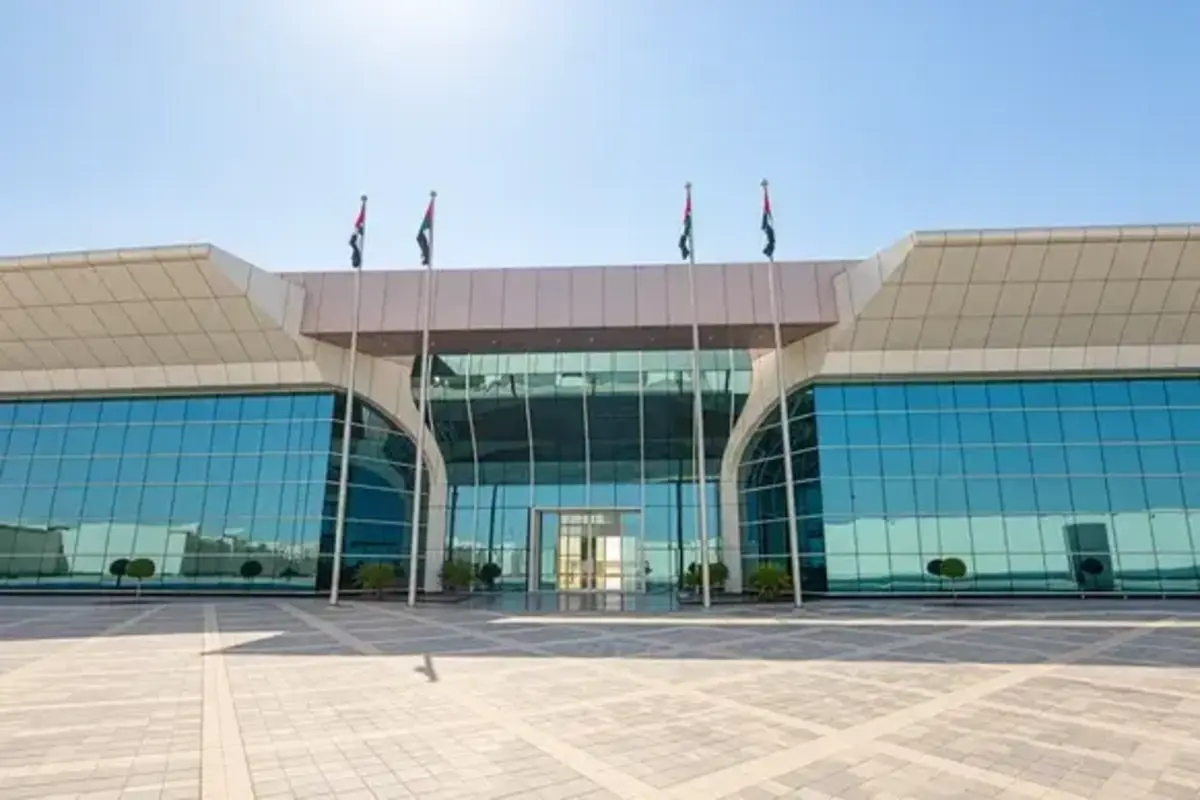
Strengthening Global Connectivity: Tahnoun International Airport's Transformative Growth
By the end of November, Tahnoun International Airport (AAN) is expected to achieve a remarkable milestone, with scheduled passenger flights projected to increase to 16 per week—a staggering 60 percent rise. This enhancement in service reflects a broader trend of growth at the airport, which recently changed its name to honor Sheikh Tahnoun bin Mohammed Al Nahyan, marking a significant step in its ongoing development.
In the third quarter of 2026 alone, Tahnoun International Airport recorded an impressive 14,724 aircraft movements, which constitutes a 17.1 percent increase compared to the same period in 2025. Cumulatively, year-to-date aircraft movements have surged to 48,558, translating to a 17.9 percent year-on-year increase. Notably, the cargo sector has demonstrated an even more vigorous expansion. The airport managed 2,335 tonnes of cargo in the same quarter, indicating a remarkable 63 percent year-on-year rise. The total cargo handled for the year so far reaches 7,335 tonnes, reflecting an extraordinary growth rate of 110.4 percent compared to the previous year.
Enhancing Connectivity via Hafeet Rail and Etihad Rail
A significant aspect underpinning the airport’s robust development is its strategic geographic positioning, which allows for convenient multi-modal access to essential aviation hubs and maritime ports across the United Arab Emirates (UAE) and the broader Gulf Cooperation Council (GCC) region. Tahnoun International Airport is uniquely situated within a mere 1.5-hour drive from Zayed International Airport (AUH) and neighboring extensive serviced free zone areas, covering 5,000,000 square meters, making it an attractive venue for businesses aiming to capitalize on the opportune logistics and transport infrastructure.
The connectivity at AAN is further set to be enhanced by the anticipated completion of the Hafeet Rail project, expected in 2028. This ambitious endeavor will connect the airport to the Etihad Rail network and Sohar Port in Oman, thereby creating an integrated transport framework that facilitates the movement of goods and passengers.
Ahmed Juma Al Shamisi, CEO of Abu Dhabi Airports, remarked, “The growth we are seeing at Tahnoun International Airport reflects the strength of its location and the role it plays in connecting Al Ain to the UAE and the wider GCC region. With convenient access to the country’s major aviation hubs and ports, and Hafeet Rail set to link the airport to the Etihad Rail network and Sohar Port, AAN is well-positioned to support the continued growth of trade and travel through Al Ain.”
A New Era of Development for Tahnoun International Airport
Evolving beyond its past, Tahnoun International Airport has entered a new era of importance and developmental potential, serving as Abu Dhabi’s second international gateway. Established in 1994, the airport has consistently facilitated connectivity for the Al Ain region and its neighboring communities. Over the past three decades, it has connected with significant locations across the Middle East, North Africa, and South Asia, bolstering trade, tourism, and overall economic activity while emerging as a pivotal cargo hub.
Encompassing an operational area of 16.7 square kilometers, Tahnoun International Airport currently caters to over 120,000 passengers annually. The airport boasts a formidable infrastructure, featuring a 4,000-meter runway capable of accommodating a diverse range of large passenger and cargo aircraft. It holds more than nine apron positions and provides dedicated facilities for passengers, cargo, VIP, and VVIP services, alongside a 2,000-square-meter cargo terminal.
Importantly, Tahnoun International Airport has evolved into a regional maintenance, repair, and overhaul hub, hosting various academies dedicated to commercial and defense pilot training. Surrounding the airport is approximately five million square meters of readily developed land, envisioning support for extensive growth across sectors such as logistics, aviation, manufacturing, technology, energy, and hospitality.
By reinforcing its position as a central pillar for future investment and economic diversification, Tahnoun International Airport aligns seamlessly with Abu Dhabi’s broader strategies for sustainable economic development, further enhancing its vital role in the growth narrative of the UAE and the region.
—
Tags: #UAE #EconomyNews #RealEstateNews