
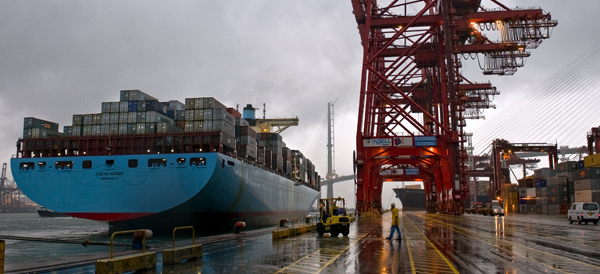
Severe congestion at the UAE’s east coast ports is causing significant delays for cargo shipments, impacting businesses and residents across the region. With waiting times for vessels extending into weeks, the situation is expected to worsen, complicating logistics and supply chains for companies reliant on timely deliveries.
East Coast Ports Face Intensifying Congestion
According to recent port advisory data from Kuehne+Nagel, as of October 30, congestion at Khor Fakkan, Fujairah, and Sharjah has reached critical levels. Vessels at Khor Fakkan are experiencing average waiting times of 7.25 days, with arrivals averaging 7.4 days late and departures 5.7 days behind schedule. Fujairah reports even longer delays, with container vessels waiting an average of 8.86 days, and late arrivals and departures averaging around 7.5 days. Sharjah, while slightly better, still sees anchorage waits of about three days, with entry and exit delays exceeding four days.
Fujairah has implemented discharge restrictions on certain types of cargo, including hazardous materials, which can further delay the unloading process. This means that even after securing a berth, vessels may face additional waiting periods before cargo can be discharged, complicating overall turnaround times.
Key Facts
- Average vessel waiting time at Khor Fakkan: 7.25 days.
- Average late arrivals at Fujairah: 7.58 days.
- Average late departures at Fujairah: 7.65 days.
- Inland transit times from Khor Fakkan and Fujairah to Jebel Ali and Abu Dhabi have increased from 5 days to 12-15 days.
- 265 bulk carriers were reported waiting across 29 ports in the Persian Gulf and Gulf of Oman.
- Maersk has adjusted booking acceptance and cargo routing for Khor Fakkan and Fujairah.
Implications for Businesses and Residents
The ongoing congestion at these ports poses serious challenges for businesses in the UAE. Companies relying on timely shipments may face increased costs and delays, affecting inventory management and customer satisfaction. The extended inland transit times mean that businesses must now plan for longer lead times when ordering goods, which could disrupt supply chains and operational efficiency.
Moreover, the restrictions at Fujairah could lead to additional complications for specific cargo types, further extending turnaround times. With alternative gateway ports nearing saturation, shippers are advised to explore options such as Salalah and Duqm in Oman, where trucking capacity remains more available. This diversification could help mitigate some of the delays currently experienced at the UAE’s east coast ports.
What Happens Next
- Shippers should consider alternative ports like Salalah and Duqm to alleviate congestion.
- Businesses are encouraged to build additional lead time into their cargo planning.
- Maersk will continue to assess the situation weekly and communicate changes to customers directly.
The congestion at the UAE’s east coast ports highlights the need for businesses to adapt to changing logistics dynamics in the region.