
DP World Unveils Innovative Living Seawall Project at Jebel Ali Port
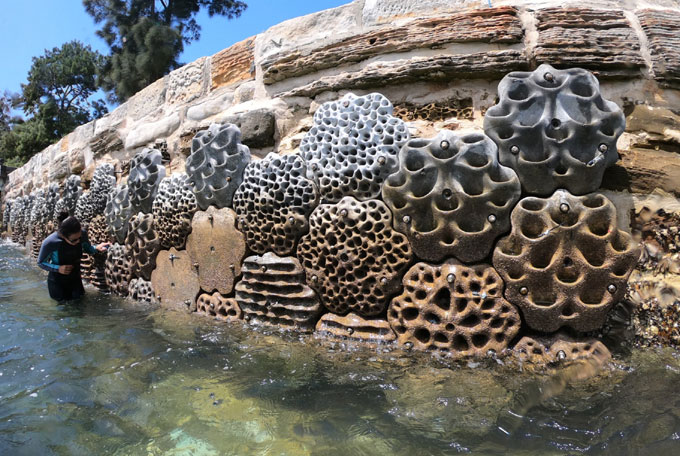
In an ambitious stride toward environmental sustainability within the maritime sector, DP World has successfully initiated the first phase of its Living Seawalls installation at Jebel Ali Port, a key logistics and trade hub in the Middle East. This project represents not only a transformative approach to port infrastructure but also a commitment to enhancing marine biodiversity. DP World has unveiled the installation of 1,000 eco-engineered panels designed specifically to convert the sheer, flat surfaces of traditional seawalls into thriving habitats for marine life.
The Living Seawalls initiative, developed in collaboration with Living Seawalls—a project affiliated with the Sydney Institute of Marine Science—aims to deploy a total of 6,000 modular panels by 2028. Once completed, this installation is expected to become the longest continuous waterfront structure in the region dedicated to fostering active ecological systems. This forward-thinking approach underscores the urgent need for infrastructure that supports trade while simultaneously protecting and restoring natural habitats.
Each panel in the installation is characterized by diverse shapes and textures that mirror natural rock formations. This design allows various marine species to colonize and flourish in areas historically considered inhospitable for marine life. Abdulla Bin Damithan, CEO and Managing Director of DP World GCC, emphasized the critical role of ports in coastal resilience. He stated, “Ports play a critical role in coastal resilience, and this programme shows how infrastructure can support trade while restoring natural habitats. By integrating science-based designs across our ports, we are helping marine life to establish and thrive in areas traditionally limited in habitat value.”
What distinguishes the Jebel Ali project is its strong focus on continuous biodiversity monitoring, set to commence in 2026. This monitoring effort will not only provide valuable insights into the ecological impact of such projects but will also contribute to the global understanding of how ports can enhance ecological resilience. This approach aligns with DP World’s Ocean Strategy and supports international biodiversity targets framed under the Kunming Montreal Global Biodiversity Framework, which is pivotal in fostering global protection of biodiversity.
The groundwork for this initiative is reinforced by the success of a pilot project at the Port of Callao in Peru, where 66 marine species were recorded over a 12-month period. Among these, seven species were unique to the Living Seawalls, indicating the effectiveness and ecological benefits of such nature-inspired designs. Remarkably, no invasive species were detected, and there was a noted increase in both algal diversity and ecological functionality. Such findings underscore the tangible benefits of integrating nature-based solutions into maritime infrastructure.
Looking ahead, DP World is committed to expanding its nature-positive projects across its network. This includes initiatives such as support for the Dubai Reef, advancing circular economy models in port waste management, and initiating further ocean-focused programs. As coastal cities globally face heightened environmental challenges, the Jebel Ali Living Seawalls project presents a scalable model that adeptly integrates scientific research, sustainability, and port development.
This pioneering project not only enhances the ecological integrity of a vital trade route but also sets a precedent for future infrastructure projects in the region focused on creating a sustainable relationship between human activity and the natural environment. It is an exemplary movement toward establishing ports not just as industrial hubs, but as pivotal players in marine conservation and biodiversity enhancement.
In a broader context, this initiative highlights an ongoing trend within the maritime industry, where the integration of ecological considerations into infrastructure development is becoming increasingly imperative. As environmental sustainability rises on the global agenda, projects like the Living Seawalls at Jebel Ali Port serve as a testament to the potential for innovative infrastructure to contribute positively to the environment and promote biodiversity.
As this initiative unfolds, it will be important not just for the marine life that it seeks to protect, but also for the communities that rely on these ecosystems for their livelihoods and for the global economy that depends on resilient maritime infrastructure.
—
Tags: #RealEstateNews, #EnvironmentNews, #UAE