
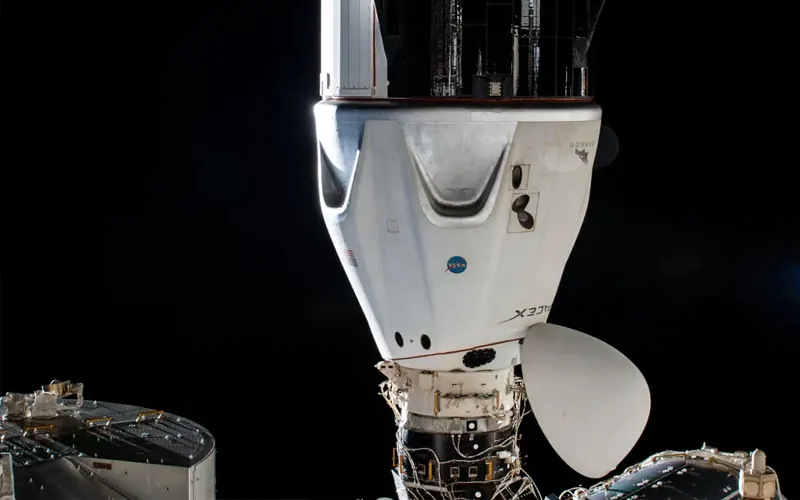
European Space Agency to Enhance Human Spaceflight Capabilities with Dedicated SpaceX Crew Dragon Mission
On March 19, 2023, during the 345th ESA Council meeting held at the European Space Agency’s (ESA) Paris headquarters, Director General Josef Aschbacher announced an ambitious new initiative aimed at augmenting the agency’s presence in human spaceflight. ESA plans to procure a dedicated SpaceX Crew Dragon mission to transport its astronauts to the International Space Station (ISS), signifying a strategic move in the evolving landscape of space exploration.
In recent years, ESA has made substantial strides in its astronaut program. In November 2022, the agency unveiled its latest class of five career astronauts. However, the current framework of collaborative agreements with NASA has limited ESA’s access to long-duration missions on the ISS; as it stands, only one of its five newly selected astronauts—Sophie Adenot—has been assigned such a mission. With the ISS scheduled for decommissioning in 2030, opportunities for additional long-term stays on the station are fast diminishing.
Against this backdrop, the announcement of the ESA Provided Institutional Crew (EPIC) mission represents a critical advancement. Aschbacher articulated that the mission would not only extend ESA’s operational profile in low Earth orbit but also allow for a more active role in ongoing scientific research and technology development aboard the ISS. According to Daniel Neuenschwander, the Director of Human and Robotic Exploration at ESA, the EPIC mission’s duration is classified as “medium,” with plans for astronaut stays to last approximately one month—significantly longer than the average duration of previous private missions, which have typically lasted around 18 days.
A key differentiator of the EPIC mission lies in its operational scope compared to traditional private missions co-hosted by Axiom Space; the latter has largely focused on specific experiments and tasks earmarked for the private astronauts. In contrast, ESA’s astronauts will engage in a more comprehensive spectrum of responsibilities, encompassing system maintenance and repairs, logistics support, and cargo operations—all vital to the ongoing functionality of the ISS and its scientific endeavors.
The EPIC mission aligns with ESA’s broader strategy to foster international collaboration in space exploration. While details regarding potential collaborators remain unconfirmed, Aschbacher indicated that ESA aims to implement the mission “with international partners.” Reporting from Australia suggests that discussions have taken place to include the Australian Space Agency in the endeavor; however, no formal agreements have yet emerged. Possible partnerships may also extend to Canada and the UAE, reflecting ESA’s commitment to creating a collaborative framework across national boundaries in the pursuit of space exploration.
As the space race accelerates, countries around the globe are intensifying their investments in human spaceflight capabilities. The growing interest in private space missions has resulted in increasing competition as commercial providers emerge, fundamentally reshaping the landscape of space travel. Notably, the engagement of ESA with SpaceX reinforces a growing trend in which traditional space agencies collaborate with innovative private sector entities to catalyze advancements in space technology and exploration.
In addition to the operational implications of such missions, ESA’s endeavors also underscore the importance of space as a laboratory for scientific research, particularly in the realms of biology, materials science, and technology. The ISS has historically served as a platform for conducting experiments in microgravity, which are integral to our understanding of fundamental scientific principles. As agencies like ESA expand their capabilities to incorporate longer missions, the potential for groundbreaking discoveries increases significantly.
The EPIC mission not only enhances ESA’s stature on the international space stage but serves as a reminder of the critical importance of sustained investment in space exploration. With the ISS nearing the end of its operational life, the agency’s proactive approach to securing a dedicated mission demonstrates a commitment to advancing human knowledge and fostering international cooperation for the future of humanity in space.
As the space exploration narrative continues to evolve, missions like EPIC will play an indispensable role in shaping our understanding of the universe and preparing for the ambitious endeavors that lie ahead, including potential missions to the Moon and Mars.
In conclusion, as the ESA gears up for this momentous journey aboard SpaceX’s Crew Dragon, it illustrates not just a leap in European space ambitions but reflects a shared global vision for exploration that transcends borders.
Tags: #BusinessNews #SpaceExploration #UAE