
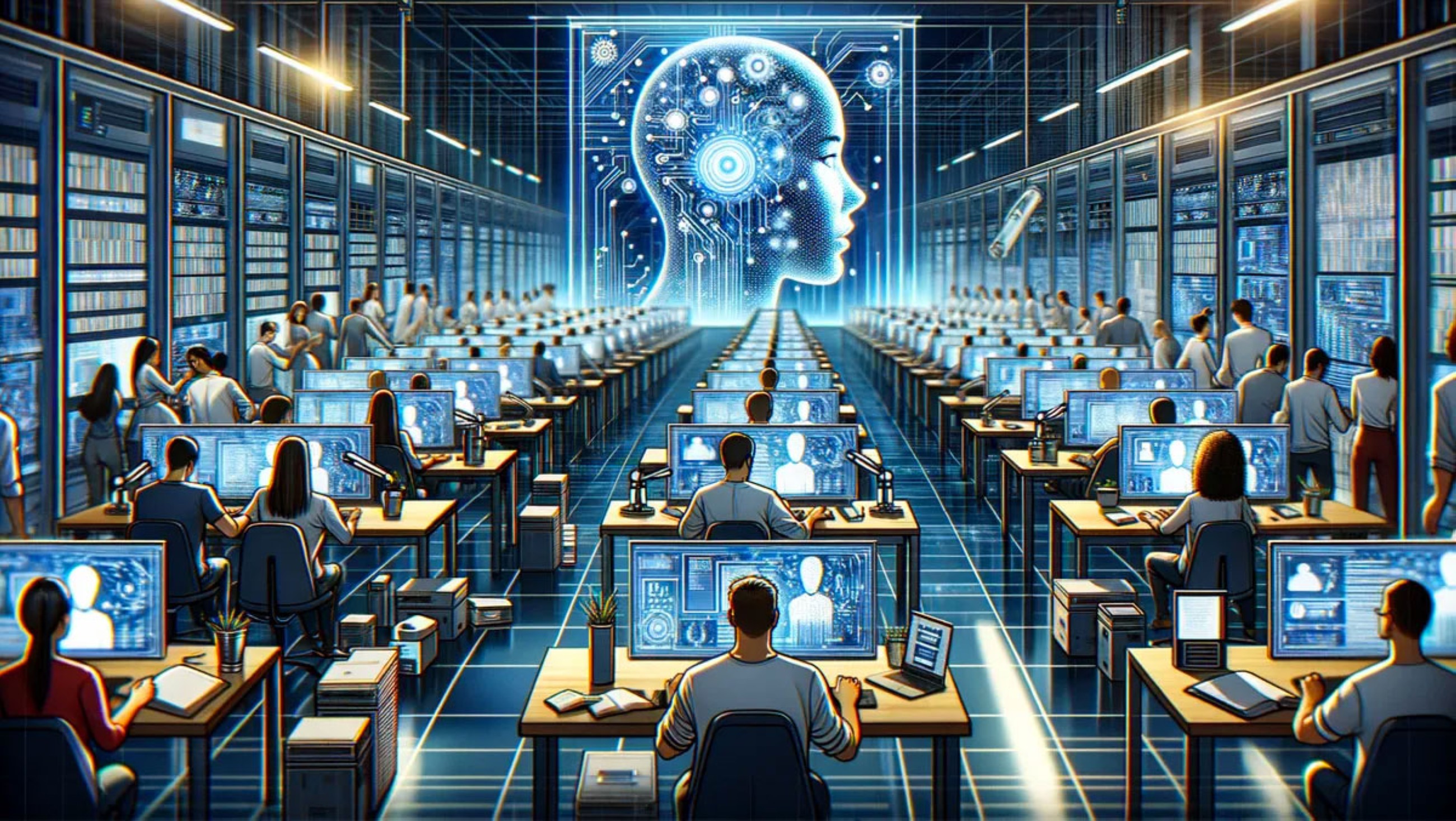
The Evolution of Productivity in the Age of Artificial Intelligence
In an era defined by rapid technological advancement, the landscape of how we seek information, collaborate, and communicate has been irrevocably transformed. The once laborious task of searching for answers has evolved, as researchers, students, and professionals alike now find themselves turning to Artificial Intelligence (AI) for assistance. What once demanded arduous hours spent poring over books and drafting meticulous reports is now often accomplished within a few moments, with tools like ChatGPT leading this revolution in efficiency and speed.
AI systems have seamlessly integrated into the various facets of our daily lives, ranging from educational environments to corporate offices and creative spaces. For every conceivable task, whether it involves drafting a project proposal, composing narrative fiction, summarizing lengthy reports, or even refining everyday correspondence, AI applications have emerged as reliable companions. This begs the question: how would we navigate our professional and personal lives without the convenience of AI?
Historically, many creative endeavors have been perceived as intrinsic to the human experience—artistic expressions that emanate from a deeply personal connection to one’s thoughts and emotions. Today, however, this perception is increasingly being challenged as algorithms equipped with expansive datasets step in to aid and augment these processes. As these AI systems learn and evolve, they prompt us to reconsider traditional methodologies and adopt new problem-solving approaches. The transition from a focus on memorization to prioritizing access and retrieval of information illustrates a significant shift in our cognitive strategies.
Within the workplace, this ongoing adaptation has been noteworthy. The expectations surrounding productivity are experiencing a shift, driven largely by the capabilities imparted by AI. Multitasking has become more manageable; communication channels have opened, allowing for swifter exchanges and feedback. As ideas evolve from nascent concepts to finalized products with unprecedented speed, employees are enjoying newfound liberties in managing their time and workload. Technology, when leveraged correctly, empowers us to accomplish more in shorter timeframes, enhancing overall effectiveness. It is crucial to acknowledge that this situation is not an isolated phenomenon experienced by individuals but rather a collective transformation impacting our society as a whole.
Indeed, the broader implications of this AI-driven paradigm shift extend beyond productivity metrics. There is also a palpable concern regarding the value placed on human creativity and critical thinking when AI systems assume roles traditionally held by humans. As AI continues to emerge in various professional domains—from journalism to legal research—it raises pressing questions. Do we risk diminishing the invaluable skills honed over years of experience? Or can AI generate a fertile ground for enhanced human creativity, collaboration, and innovation?
Moreover, the integration of AI in our daily lives fosters a new type of digital literacy. As discussions around ethics in AI become increasingly relevant, individuals are called to grapple not only with new tools but also the implications of their usage. The repertoire of skills required in today’s workforce is evolving, and with it, the educational systems must adapt to better equip learners with the necessary competencies to thrive in this digital landscape.
As we reflect on the full impact of AI on our lives, it becomes evident that the challenges and opportunities presented by technological advancements are intertwined. The rapid pace of AI development poses significant questions that society must engage with thoughtfully and respectfully. One must not only recognize the benefits offered by AI but also advocate for ethical standards and encourage practices that enhance human values.
The journey we embark on with AI will shape our collective future. As we traverse this complex terrain, an open dialogue surrounding technology’s role, accompanied by a commitment to responsible application, will be essential in determining the trajectory of our social and professional landscapes. Echoing the sentiments of many experts, it is vital that we embrace AI as an empowering force while simultaneously safeguarding the unique qualities that define human experience.
Mathew Litty,
Dubai
—
Tags: #BusinessNews, #EconomyNews, #UAE