
Faya Palaeolandscape in Sharjah: A Landmark in Heritage Preservation
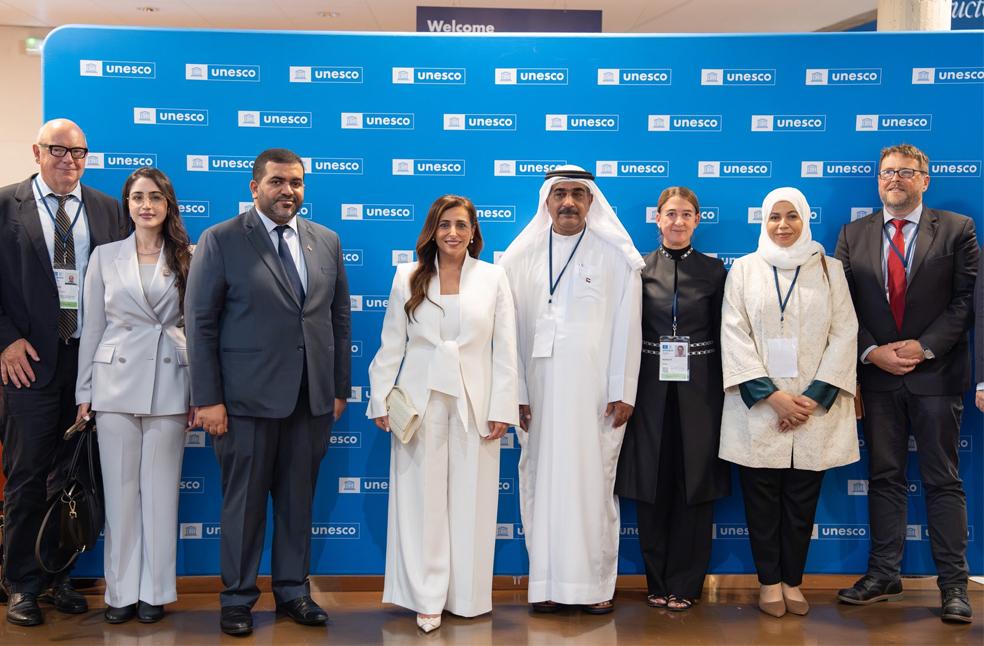
In a significant development for cultural heritage preservation, the UNESCO World Heritage Committee has officially inscribed the Faya Palaeolandscape in Sharjah on its esteemed World Heritage List under the Cultural Landscape category. This momentous recognition as of July 11, 2025, not only marks a profound achievement for the United Arab Emirates (UAE) but also highlights Sharjah’s pivotal role in understanding human history in the Arabian Peninsula.
The inscription of the Faya Palaeolandscape is a notable milestone, as it represents the only Arab site to be added to the World Heritage List in 2025 and the second site from the UAE, following Al Ain’s cultural sites, which were included in 2011. Situated in the heart of Sharjah, the Faya Palaeolandscape offers invaluable insights into some of the earliest signs of human habitation in arid environments, tracing back over 200,000 years. It stands as the first desert Paleolithic site to achieve recognition on the World Heritage List, underscoring its significance in the narrative of human evolution within Southeast Arabia.
The site was introduced for consideration by Sharjah in February 2024, following twelve years of meticulous documentation and preparation. The successful inscription follows a rigorous evaluation process that adhered to UNESCO’s criteria for Outstanding Universal Value, further solidifying Sharjah’s commitment to intertwine heritage conservation, education, and sustainable development. This commitment aligns with the vision of His Highness Sheikh Dr. Sultan bin Mohammed Al Qasimi, Supreme Council Member and Ruler of Sharjah, who has long championed the importance of cultural heritage in fostering national identity and global awareness.
Sheikha Bodour bint Sultan Al Qasimi, who spearheaded the initiative as the official ambassador of the nomination file, expressed her heartfelt gratitude to the World Heritage Committee for recognizing the importance of the Faya Palaeolandscape. “This inscription reaffirms Sharjah’s crucial role in early human history and highlights the significance of the Arabian Peninsula as a foundation for human migration from Africa,” she remarked. The archaeological findings at Faya, especially the stone tools unearthed from the site, serve as testaments to the ingenuity of our ancestors and the profound cultural heritage that underpins the region.
Eisa Yousif, Director-General of the Sharjah Archaeology Authority, echoed this sentiment, emphasizing that the Faya Palaeolandscape now symbolizes a shared heritage that transcends borders. “Faya now belongs to all peoples of the world, just as it did over 200,000 years ago,” stated Yousif. This inscription is the culmination of extensive scientific research, cultural conservation efforts, and international collaboration, capturing the essence of global cooperation in heritage preservation.
Archaeological endeavors in the Faya region have been ongoing for over three decades, backed by substantial support from esteemed international institutions like the University of Tübingen in Germany and Oxford Brookes University in the United Kingdom. Their collaborative efforts have led to the discovery of 18 archaeological layers that vividly illustrate the continuous presence of early human communities in desert settings.
The UAE and Sharjah are set to implement a comprehensive conservation plan for the years 2024 to 2030, aimed at maintaining Faya’s universal value. The plan focuses on further research, educational outreach, and promoting sustainable tourism, ensuring that the Faya Palaeolandscape remains a point of pride for generations to come.
In addition, this site plays a vital role within UNESCO’s Human Evolution, Adaptations, Dispersals and Social Developments (HEADS) Program, standing alongside internationally significant locations such as the Klasies River Caves and Wonderwerk Cave. As of now, the UNESCO World Heritage List comprises a total of 1,226 sites across 168 countries, including 955 cultural sites, 231 natural sites, and 40 mixed sites. Within the Arab region, there are currently 96 World Heritage sites distributed across 18 countries, accentuating the region’s dedication to preserving global heritage.
The recognition of the Faya Palaeolandscape not only elevates Sharjah’s profile on the international heritage stage but also underscores the UAE’s commitment to celebrating and conserving its rich cultural legacy. As we move forward, efforts will be dedicated to safeguarding this treasure, ensuring it serves as a source of inspiration and education for future generations.
Tags: #RealEstateNews, #CulturePeopleNews, #UAE