
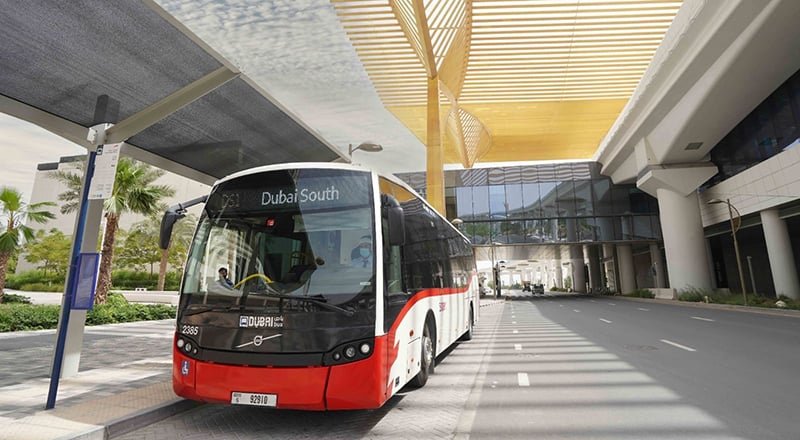
Dubai Expands Public Transport Network with New and Enhanced Bus Routes
The public transport landscape of Dubai is undergoing a significant transformation, driven by a commitment from the Roads and Transport Authority (RTA) to improve city connectivity. As part of this initiative, five new bus routes have been introduced, in addition to nine existing routes that have been revamped. This comprehensive expansion effort is designed to cater to the ever-growing population of Dubai, which has recently surpassed four million residents, a milestone that underscores the critical need for efficient and accessible public transportation solutions.
The RTA’s recent announcements are emblematic of Dubai’s wider vision to enhance urban mobility, fostering a more integrated transportation network that meets the demands of its diverse populace. As the city strives to position itself as a global hub for tourism and business, these bus route modifications are not just about increasing transit options; they are about creating a more sustainable urban environment.
New Bus Routes: Expanding Connectivity
Among the newly launched routes, Route 31, which connects Dubai Outsource City with Dubai Silicon Oasis, stands out. Operating at 20-minute intervals during peak hours, this service aims to serve the burgeoning business districts that are critical to Dubai’s economy.
Additionally, the existing Route 62 has been divided into two distinct routes—62A and 62B. Route 62A will transport passengers between the Al Qusais Industrial Area and Al Qusais Metro Station, while 62B will link the Al Qusais Metro Station with the Ras Al Khor and Samari Residences. Both routes are designed to operate every 30 minutes during peak hours, thus ensuring a regular flow of transportation for commuters.
Route F26A has been introduced to enhance connectivity within the Al Quoz Industrial Area, offering service from Onpassive Bus Station to Al Quoz Industrial Area 4. Like its counterparts, buses on this route will operate every 30 minutes during peak operating hours, facilitating easier access for employees and visitors in one of Dubai’s key economic zones.
In an effort to provide expedited service, Route X91 has been launched as an express connection between Al Ghubaiba Bus Station and Jebel Ali Bus Station. This new route will not make stops at the Business Bay Metro Station, allowing for quicker travel times, a critical advantage for those commuting across the city.
Upgraded Existing Routes: Improving Efficiency
The RTA has also undertaken enhancements to several existing routes, further improving the overall efficiency of the public transport network. Route 7 has transitioned into a two-directional service, seamlessly connecting Al Quoz Bus Station with Al Satwa Bus Station. Meanwhile, Route 91 has been streamlined to run exclusively between Al Ghubaiba Bus Station and Business Bay Metro Station, making it a more efficient option for travelers.
Other upgrades include Route F62, which is now a two-directional service between Emirates Metro Station and Nad Al Hamar. Similarly, Route 77 will now operate between Baniyas Square Metro Station and Al Garhoud in both directions. This adaptability and revision of routing reflect the RTA’s commitment to respond to the evolving needs of commuters, ensuring that service remains relevant and efficient.
Furthermore, adjustments have been made to Routes X25, 50, 21A, and 21B, tailoring these services to better align with commuter patterns and to enhance the overall transit experience.
Looking Toward the Future of Public Transportation
Dubai’s ongoing efforts to enhance its bus network reflect a larger trend across the globe, where urban centers are increasingly prioritizing public transportation as a means of reducing congestion, minimizing environmental impact, and enhancing quality of life. By making public transport easier to access, the RTA not only promotes greater use of buses but also contributes to the city’s sustainability goals, including reduced carbon emissions and traffic congestion.
In conclusion, as Dubai continues to grow, the expansion and improvement of its public transport network will play a pivotal role in accommodating this growth. The addition of new routes, alongside enhancements to existing services, signals a proactive approach to urban mobility that prioritizes accessibility and efficiency—an imperative for a city committed to its future as a global leader in innovation and economic vitality.
Embracing these changes will not only make commuting more convenient for residents but also create a more interconnected and sustainable urban landscape. In this transformative phase, Dubai stands as a testament to the power of strategic planning in shaping the future of urban living.
Tags: #Dubai #EconomyNews #PublicTransport