
Title: Empowering Communities Through Nature-Based Approaches: Insights from the IUCN World Conservation Congress
Date: October 13, 2025
Location: Abu Dhabi, UAE
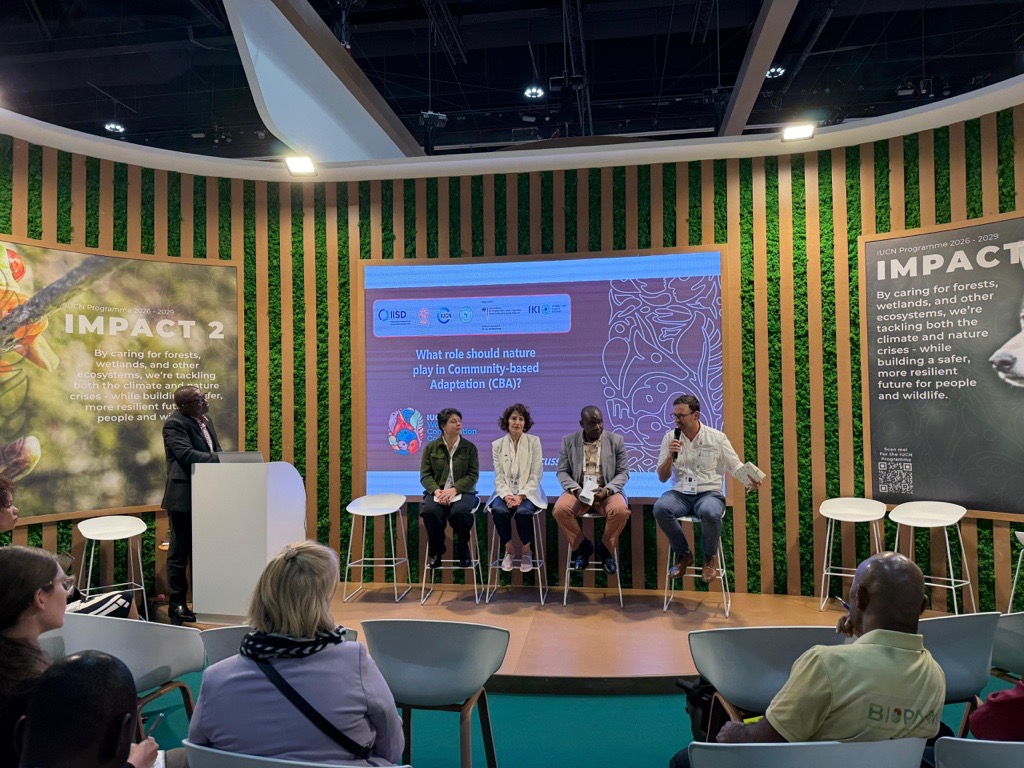
The recent session held at the International Union for Conservation of Nature (IUCN) World Conservation Congress in Abu Dhabi provided a compelling overview of Community-Based Adaptation (CBA) strategies drawn from the experiences of communities in various countries, including Zimbabwe, Zambia, Mozambique, and regions in the Middle East such as Jordan, Syria, and Lebanon. This session highlighted the critical role that locally-driven initiatives aimed at environmental conservation can play in meeting global climate challenges.
Setting the Scene: Local Leadership, Global Learning
Initiating the discussion, Mr. Julio João, the Provincial Director of Agriculture and Fisheries in Inhambane, underscored the significance of utilizing and augmenting existing community responses to climate shocks. His insights serve as a reminder of the potential for local leadership to yield beneficial outcomes in addressing today’s pressing environmental issues. The dialogue pivoted towards recognizing the inherent knowledge present within communities, suggesting that indigenous practices and local responses to climate change should form the bedrock of adaptation strategies.
Furthermore, Carla Manjate Rombe of IUCN Mozambique introduced the CBAScale+ project, advocating for a participatory approach in co-designing CBA strategies. She emphasized the importance of inclusive processes, which engender trust and ownership among community members. Tools such as Participatory Climate Vulnerability Assessments (PCVAs), Community Adaptation Action Plans (CAAPs), and Participatory Scenario Planning (PSPs) were identified as pivotal in reinforcing these efforts. Through these methodologies, communities develop tailored responses that are both impactful and sustainable.
Carla Manjate Rombe
Nature as the Foundation for Adaptation and Resilience
The session’s first round of discussions, moderated by Simba Mandota from IUCN Zimbabwe, delved into the integration of Ecosystem-based Adaptation (EbA) within the CBA framework. This approach prioritizes local climate resilience while concurrently promoting biodiversity. Alec Crawford, Director of Nature at the International Institute for Sustainable Development (IISD), labeled the adoption of Nature-based Solutions (NbS) as a “no-brainer.” He articulated that, particularly in Southern Africa, where communities’ livelihoods are intimately tied to natural resources, embracing EbA offers both financial and ecological benefits. By leveraging local species and indigenous knowledge, these strategies promise to be both pragmatic and effective.
Dr. Myrna Semaan, President of Friends of Nature and a member of the IUCN Climate Action Commission, echoed this sentiment in her remarks, pointing out the resilience of communities and ecosystems. “Governments come and go, but people and ecosystems remain. If we want to reduce societal risks, we must invest in people and nature,” she asserted. This perspective emphasizes a long-term view that values ecological integrity alongside societal stability.
Adding to the discourse, Helene Hoffmann of Germany’s International Climate Initiative expressed her commitment to supporting initiatives that foster collaboration between local communities and global partners. She emphasized the need for a shared understanding and joint action, noting that sustainable outcomes occur when diverse stakeholders, including local communities, governments, and international organizations, unite toward common goals.
Conclusion: Bridging Local and Global Efforts in Climate Action
The discussions at the IUCN World Conservation Congress reaffirmed a crucial paradigm: climate adaptation is most successful when grounded in local realities and shaped by those who experience environmental changes firsthand. As nations grapple with increasingly severe climate impacts, harnessing local knowledge and fostering community engagement present pivotal strategies to build resilience.
By fostering inclusive and participatory approaches, we can cultivate a new generation of climate adaptation frameworks that not only mitigate risks but also enhance biodiversity. This methodology not only empowers communities but offers a model for cooperation between local actions and global ambitions, paving the way toward a sustainable and resilient future.
Tags: #UAE #EconomyNews #EnvironmentNews