
The Middle Corridor: A Beacon of Stability Amid Geopolitical Anxieties
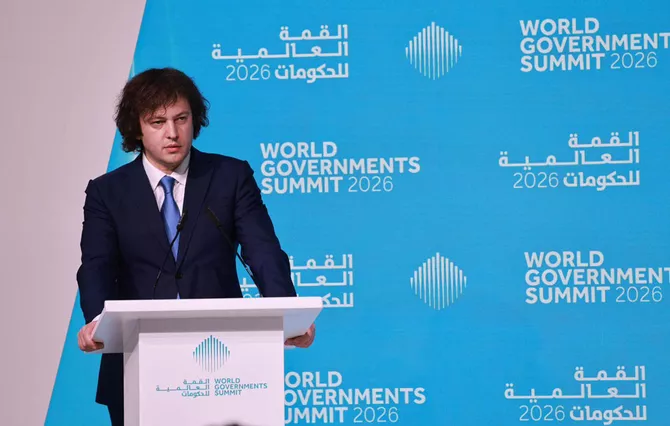
In an age marked by escalating geopolitical tensions and burgeoning trade uncertainties, the Middle Corridor emerges as a vital artery linking East Asia to Europe through Central Asia, the Caucasus, and Turkey. Georgian Prime Minister Irakli Kobakhidze emphasized the significance of this route during the World Government Summit 2026, asserting that it provides an increasingly rare commodity in today’s global landscape: stability and reliability.
As nations grapple with the disruptions caused by shifting alliances and unpredictable geopolitical events, the traditional trade routes that long served as the backbone of international commerce have grown increasingly tenuous. The Prime Minister’s statements, elucidated in various media outlets including The Caspian Post, underscore the pressing need for alternative corridors that can ensure the smooth flow of goods and services across vast regions.
“The question before us today is not whether this transformation is happening—it clearly is,” Kobakhidze asserted. “The real question is how we respond.” He called for a collective effort to cultivate a trading system robust enough to withstand the unpredictable shocks common in our current global climate. This system must also be open enough to continue fostering prosperity, which has become indispensable in maintaining global economic vitality.
In recognizing the shifting dynamics of international trade, the Georgian Prime Minister articulated a fundamental truth: in a fragmented global economy, nations equipped to bridge these divides will be invaluable. As competition among global superpowers intensifies, the need for dependable trade routes becomes ever more pronounced. The Middle Corridor thus transforms from a mere choice into a strategic necessity for countries aiming to maintain strong economic ties amid rising tensions.
Kobakhidze advanced an important thesis: the world does not require a reduction in trade; rather, it necessitates the establishment of more resilient trading systems. The notion of intelligent diversification stands as a guiding principle, advocating for interconnected trade routes that do not compel nations to take sides but instead cultivate mutual dependencies that enhance economic stability.
The Middle Corridor, with its unique positioning, offers a dual advantage: it facilitates access to vital markets while simultaneously fostering a collaborative spirit among participating countries. Covering hundreds of miles through diverse geographical landscapes, this corridor serves as a conduit for trade that not only retains its integrity amidst turbulence but also encourages sustainable economic growth across the regions it connects.
Throughout the World Government Summit, which convenes in Dubai from February 3 to 5, discussions centered around the pressing need for innovative solutions to the challenges posed by contemporary global trade dynamics. The engagement of multiple stakeholders is crucial for nurturing these discussions and ensuring that the Middle Corridor receives the attention and investment necessary to realize its full potential.
In the context of the Middle Corridor, the recognition of its strategic significance aligns with the broader trend of transitioning towards a multipolar world, where no single nation or bloc dominates. As a result, countries that champion stability and collaboration will likely yield economic advantages in the new global order. The geographic positioning of Georgia serves as a pivotal nexus in this evolving structure, further enhancing its role as a facilitator of trade and commerce.
In conclusion, as Prime Minister Kobakhidze highlighted, the Middle Corridor is not merely an alternative but rather an imperative for global commerce in a time of uncertainty. Countries and businesses must harness this potential by fostering relationships and investing in infrastructure that promotes the seamless movement of goods and services. Only through such strategic foresight can nations hope to thrive amidst the complexities of the 21st century’s geopolitical landscape.
Tags: #BusinessNews, #EconomyNews, #MiddleEast, #Georgia, #TradeRelations