
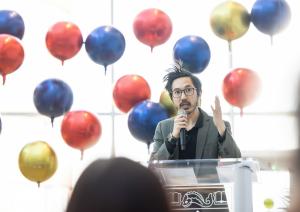
A Transformative Leap in Medical Education: The RTW Foundation's Historic Gift to the Perelman School of Medicine
In a groundbreaking moment for medical education, the Perelman School of Medicine at the University of Pennsylvania has received an unprecedented million donation from the RTW Foundation, championed by esteemed alumni Rod Wong, M’03, and Marti Speranza Wong, C’98. This donation marks the largest single contribution aimed at innovating the school’s curriculum in its storied history, setting the stage for a significant evolution in how future physicians will be trained.
This ambitious initiative emerges at a pivotal time, recognizing the rapid advancements in medical technology and healthcare methodologies. As gene therapies become more prevalent, artificial intelligence begins to enhance clinical decision-making, and telemedicine transforms patient interactions, there is a pressing need for medical education that not only keeps pace with these changes but also anticipates and propels them. The newly conceptualized curriculum aims to harness these evolving technologies, ensuring that students receive a modern, comprehensive education that prepares them for the complexities of contemporary medicine.
The Vision Behind the Initiative
Rod Wong, reflecting on the motivation for this transformative gift, emphasized his belief in medical innovation as the key to a brighter future. “I believe medical innovation is the key to life being better in the future than it is today,” Wong stated. “And as science accelerates, to train physicians for the future, so should education.” This sentiment encapsulates the essence of the new educational approach—one that is imbued with flexibility and responsiveness to the dynamically changing landscape of healthcare.
The integration of precision medicine concepts into educational design is a significant step forward. By utilizing data-driven insights, AI, and advanced technology, the curriculum aims to personalize the educational experience for each student. For instance, tools such as ambient listening technology will be deployed to enhance students’ clinical reasoning skills, encouraging collaboration among interdisciplinary teams of healthcare professionals. Additionally, the use of customized augmented reality (AR) and virtual reality (VR) simulations will refine students’ understanding of anatomy and procedural skills, enabling them to diagnose and treat ailments with greater confidence and precision.
Expanding Educational Horizons
In line with the innovative spirit of this initiative, the RTW Foundation’s gift will also facilitate the establishment of the Roderick Wong, M’03 Endowed Lectureship in business and entrepreneurship. This program is set to bring influential figures from the realms of medicine and healthcare innovation to Penn’s campus twice annually, fostering an environment of rich dialogue and mentorship. The introduction of the Roderick Wong Entrepreneurship Pathway further emphasizes this commitment to fostering a culture of innovation within medical education. This pathway will provide mentorship and hands-on learning opportunities, allowing students to explore entrepreneurial ventures that address real-world healthcare challenges.
The history of Wong and the RTW Foundation’s contributions to the Perelman School of Medicine also reflects a broader commitment to fostering creativity and critical thought. Notably, Wong was instrumental in the creation of PennHealthX, a program that encourages students to embark on entrepreneurial projects at the intersection of healthcare management, technology, and innovation. Through this initiative, numerous student-driven startups have emerged, addressing crucial issues in healthcare.
A New Chapter in Medical Training
Historically, medical education has often adhered to a rigid, one-size-fits-all model. The impending changes at the Perelman School of Medicine reflect a shift away from this traditional framework towards a more tailored, learner-centered approach. This shift began with the launch of “Curriculum 2000,” which emphasized professionalism and patient-centered care. The legacy of such innovations will now be furthered through the leadership of prominent figures such as Lisa M. Bellini, MD, and Jennifer R. Kogan, MD, both of whom have played instrumental roles in shaping medical education at Penn.
Moreover, the initiative’s impact is not confined to the Penn campus; it aims to set a global standard in medical training. By focusing on research, experimentation, and sharing new educational tools openly, the reimagined curriculum has the potential to influence medical schools worldwide. The collaborative efforts fostered through Penn’s partnerships with institutions like VinUniversity in Vietnam and the upcoming American University in Dubai are testament to this ambition.
Conclusion
As the Perelman School of Medicine embarks on this transformative journey, the RTW Foundation’s generous gift serves as a catalyst for innovation in medical education. By embracing technological advancements and fostering an entrepreneurial spirit, the school sets out to equip the next generation of physicians not just with knowledge, but with the skills and resilience necessary to navigate and lead in an increasingly complex healthcare landscape. The vision outlined by Rod Wong and the RTW Foundation heralds a new era in medical education, one that promises to shape the future of healthcare for years to come.
Tags: #EducationNews #BusinessNews #RealEstateNews #Philadelphia #WorldNews