
The Celestial Symphony of Ramadan: A Glimpse into 2026's Astronomical Events in Saudi Arabia
As the Islamic world prepares for the observance of Ramadan in 2026, a confluence of remarkable astronomical phenomena is set to grace the skies over Saudi Arabia and its neighboring regions. This holy month, which is anticipated to commence on February 18, 2026, following the sighting of the crescent moon, will offer a unique spectacle featuring a planetary alignment, a full “Lavender Moon,” and a penumbral lunar eclipse. These celestial events promise to enhance the spiritual ambiance that accompanies this significant period of reflection and devotion for millions around the globe.
Planetary Alignment: A Celestial Conjunction
At the onset of Ramadan, stargazers will be treated to a breathtaking sight as the crescent moon aligns closely with Saturn, Mercury, and Venus along the western horizon shortly after sunset. This conjunction marks one of the more visually striking phenomena observable from Earth, as it occurs when planets appear to congregate closely together, despite their distinct positions within the solar system.
Fast-forward to February 28, 2026—an extraordinary evening for astronomy enthusiasts—the alignment will feature not just these three planets, but a total of six, forming an imagined line in the night sky. Venus, Jupiter, Saturn, and Mercury will be observable with the naked eye, while those equipped with telescopes may spot the more distant bodies of Uranus and Neptune. Such a celestial display serves as an enchanting reminder of the mysteries of our universe, stirring curiosity and fascination among both the devout and the scientifically inclined.
The “Lavender Moon” and its Penumbral Lunar Eclipse
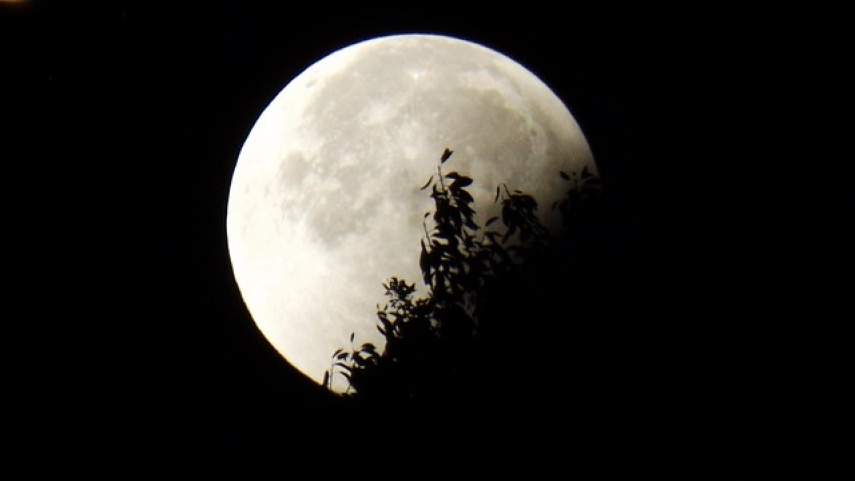
The lunar spectacle continues on March 3, 2026, with a penumbral lunar eclipse visible from select areas in Oman and the United Arab Emirates. During this particular type of eclipse, the moon will pass through the Earth’s outer shadow, resulting in a subtle dimming of its luminescence rather than a complete obscuration. While lesser-known compared to total eclipses, penumbral eclipses still hold significant allure for observers, offering unique perspectives on lunar visibility and illumination.
Coinciding with this eclipse is the occurrence of the full moon, often referred to as the “Lavender Moon.” This poetic nomenclature arises from the time of year when early spring flowers begin to bloom, decorating the landscape with hues of purple and lavender. The combination of the eclipse and the emergence of this named moon is expected to evoke a harmonious atmosphere that enhances the already profound spiritual reflections during Ramadan.
The Significance of the Spring Equinox
Adding another layer of astronomical significance to this period is the arrival of the spring equinox on March 20, 2026. Marking the official beginning of spring, this equinox represents a pivotal moment when the sun crosses directly over the equator, creating nearly equal hours of daylight and darkness across the globe. For the inhabitants of Saudi Arabia and the broader Middle Eastern region, this transition heralds a time of renewal and rejuvenation, resonating with the themes of reflection and purification inherent to Ramadan.
Educational Opportunities and Broader Implications
Beyond their aesthetic and spiritual appeal, these celestial phenomena provide exceptional educational opportunities. Experts highlight how observing the geometry of lunar eclipses and understanding solar declination during equinoxes can deepen public appreciation for astronomy. Such events offer a practical context for scientific education, encouraging curious minds to explore the mechanics of our solar system.
Moreover, enthusiasts can expect to see the International Space Station (ISS) traversing the skies as a luminous, fast-moving object—an invitation to reflect on humanity’s quest for knowledge beyond our planet. This asynchronous dance of celestial bodies during Ramadan underscores the interconnectedness of astronomy, spirituality, and the human experience.
Conclusion: A Unique Intersection of Faith and Science
The convergence of these astronomical occurrences with the sacred observance of Ramadan in 2026 creates a distinctive context that bridges faith and scientific inquiry. As individuals prepare to embark on a month of fasting, introspection, and devotion, the cosmos will grant a spectacular backdrop, igniting curiosity and wonder—a chance to ponder the vastness of creation while engaging with the spiritual significance of this holy month.
As February 18 approaches, the anticipation for both the start of Ramadan and these celestial events grows. In a time marked by division and uncertainty, such harmony between science and spirituality can uplift and inspire communities across Saudi Arabia and beyond.
—
Tags: #Saudi, #EconomyNews, #PeopleCultureNews