
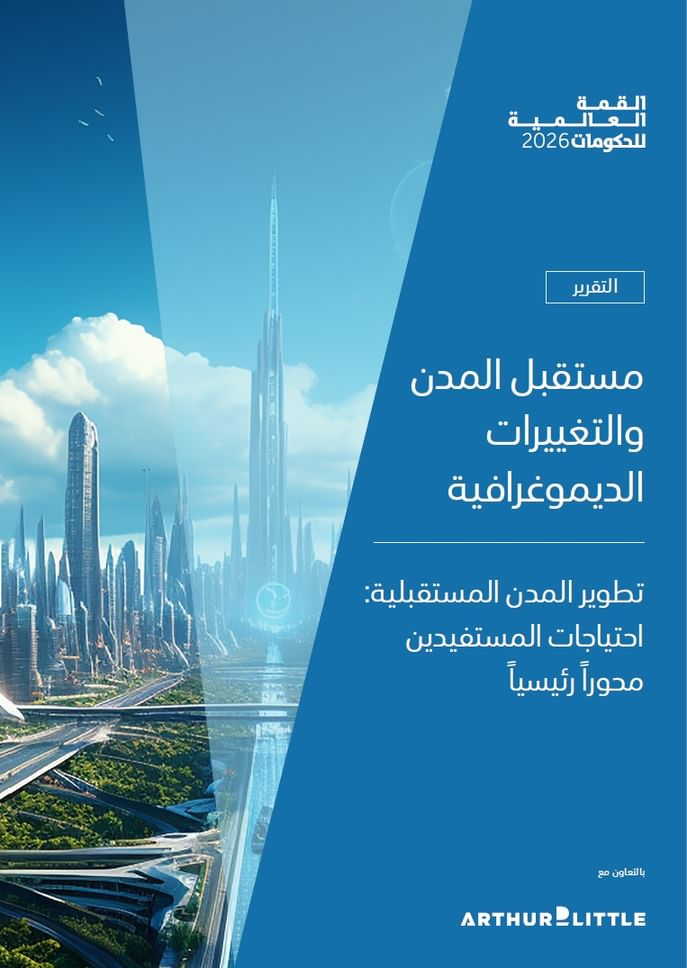
Rethinking Urban Living: The Imperative Shift Towards Customer-Centric Smart Cities
In a compelling presentation at the World Government Summit, a new global report has emerged that prompts urban planners and policymakers to reconsider their approach to city development. The document, created in collaboration with esteemed management consultancy Arthur D. Little, spotlights the pressing need for cities worldwide to transition toward a more personalized, customer-centric model. This shift, it warns, is not merely advantageous; it is essential for maintaining competitiveness and enhancing the quality of urban life.
Titled Urban Futures and Changing Demographics: Transforming Cities of the Future Through Customer-Centricity, the report provides a thorough analysis of how urban centers can prioritize their citizens in the wake of technological transformation—while simultaneously addressing demographic shifts, urbanization challenges, and the decline in overall livability in many metropolitan areas. The urgency of this report is underscored by the fact that over half of the global population currently resides in urban spaces, a number that is expected to grow.
While this rapid urban expansion offers economic opportunities and a concentration of resources, it often comes at the expense of livability. Infrastructure strains, increased traffic, and environmental degradation frequently overshadow the benefits. The report contends that a customer-centric urban framework can counteract these negative trends. By focusing on delivering personalized, sustainable, and engaging experiences, cities can better integrate digital advancements with inclusive planning and citizen involvement.
Key Directions for Future Urban Development
The report outlines five pivotal directions set to shape the next generation of smart cities. These innovative approaches include:
1. Individual-Level Personalisation: Leveraging Artificial Intelligence (AI) and adaptive infrastructure to tailor services and amenities to individual needs.
2. Neuro-Responsive Environments: Creating environments that intuitively respond to user behavior, reducing the effort required for interactions with public spaces and services.
3. Bio-Integrated Infrastructure: Developing self-maintaining structures that utilize natural processes while minimizing human intervention.
4. Autonomous Civic Services: Implementing technologies to manage civic services with human oversight, ensuring efficiency and accountability.
5. Climate-Adaptive Systems: Designing urban landscapes that prioritize public safety in the face of climate changes, ensuring resilience against environmental challenges.
Looking ahead to 2070, the report envisions a radically redefined urban experience characterized by collective digital twins—virtual representations of city environments that can simulate and predict real-world changes. Such models would incorporate semi-autonomous infrastructure ecosystems, AI-enhanced transportation and education systems, as well as climate-resilient urban centers, including innovative concepts like floating districts and expansive, renewable energy-driven megacities.
To actualize these transformative ideas, the report urges city leaders to adopt several strategic initiatives. These include crafting lucid visions for city advancement, championing digital inclusion at all levels of society, developing adaptable data platforms, and rigorously measuring citizens’ well-being. Moreover, cities must test new operational models through regulated pilot programs, establish transparent governance structures for AI utilization, and integrate sustainability as a foundational principle across all services.
Technology Serving Humanity
“Smart cities succeed when technology serves people, not the other way around,” remarked Samir Imran, a Partner for Travel, Transportation, and Hospitality at Arthur D. Little Middle East. His statement encapsulates the essence of the report’s call to action: prioritizing the human experience amidst technological innovation.
By placing citizens at the heart of digital transformation, urban environments can cultivate settings that are not only livable and sustainable but also competitive on a global stage. The implications of this vision reach far beyond mere infrastructure; they encompass the social fabric of cities, the economic dynamics at play, and the collective well-being of urban populations.
As the world grapples with rapid changes in population and urban landscapes, the insights presented in this report challenge city leaders to innovate thoughtfully and inclusively. Emphasizing a shift towards customer-centric urban management could well define the success and sustainability of our cities in the near future, ensuring they meet the needs and aspirations of their residents.
Tags
#UrbanDevelopment #SmartCities #EconomyNews #CommunityNews #UAE