
Kuwait International Airport Expansion: A Pivotal Development in Gulf Aviation
Kuwait International Airport is on the cusp of a transformative expansion that is poised to redefine its status as a major aviation hub in the Gulf region. With the ambitious construction of the new Terminal 2, the airport is set to enhance its operational capacity significantly, aligning with the broader national development plan known as “Kuwait Vision 2035.” This visionary strategy encompasses an array of initiatives aimed at diversifying the economy and modernizing infrastructure, with the enhancement of the airport being a key component.
The freshly constructed Terminal 2 will have the capability to accommodate an impressive 25 million passengers annually, with the infrastructure designed to be scalable up to 50 million as demand grows. This ambitious capacity is a clear indication of Kuwait’s aspirations to become a vital connecting point for international travelers and a gateway to the region. Given the influx of air travelers in the Middle East, this expansion is particularly timely, as it positions Kuwait to meet the increasing demand for travel while enhancing its competitiveness within the aviation sector.
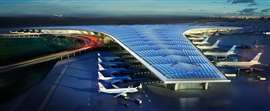
Among the core elements incorporated into the construction of Terminal 2 is a robust power supply system, which is crucial for maintaining uninterrupted operations. Rolls-Royce, a leading player in the energy sector, has secured a contract to supply seven MTU generators that will anchor this essential infrastructure. These 20-cylinder Series 4000 DS 3600 diesel generators are engineered to deliver between 3,580 to 3,730 kVA, ensuring that critical areas of the terminal, including the catering building and central energy infrastructure, have reliable backup power.
One of the notable features of these generators is their resilience, as they are specifically designed to operate efficiently in extreme climatic conditions, capable of withstanding ambient temperatures as high as 55 degrees Celsius. This characteristic is particularly relevant for Kuwait, where environmental factors can pose significant challenges to infrastructure. Salim El Banna, the country sales manager for Rolls-Royce’s Power Systems division, emphasized the importance of this technology, stating, “We are proud that our products ensure the stable operation of critical infrastructure at the airport – even in this region with its extreme environmental conditions.”
The delivery of these generators is anticipated in early 2026, followed by an extensive commissioning process that will include rigorous testing before the systems are handed over for operational use. This timeline reflects the careful planning and execution required to facilitate a smooth transition into the new infrastructure.
What sets this expansion apart from similar projects in the region is Kuwait’s commitment to sustainable development. The airport follows stringent environmental and safety protocols, aligning with global sustainability standards. This commitment is evidenced by the investment in cutting-edge technology that not only enhances operational efficiency but also minimizes the environmental footprint of airport operations. By prioritizing sustainability, Kuwait positions itself as a forward-thinking nation, embracing innovation while enhancing its appeal to global travelers and businesses alike.
Furthermore, the expansion of Kuwait International Airport holds tangible benefits for the local economy. Increased air travel capacity is projected to stimulate significant growth in tourism, trade, and various ancillary industries. As a key player in the Gulf Cooperation Council (GCC) region, Kuwait’s enhanced connectivity will undoubtedly attract more foreign investment, further diversifying the economy away from its traditional oil dependence.
The expansion project also aligns with broader trends in the aviation industry, where there is a relentless push towards modernization and the implementation of state-of-the-art passenger experiences. With the construction of Terminal 2, Kuwait is not merely keeping pace with its Gulf neighbors but is actively carving out its niche as a leader in airport modernization.
As the project moves forward, Kuwaiti officials and stakeholders remain optimistic about the implications for national growth and regional prestige. In an era where global connectivity is paramount, the strategic enhancements at Kuwait International Airport symbolize a commitment to embracing the future of air travel and tourism.
In conclusion, the expansion of Kuwait International Airport through the development of Terminal 2 is more than a construction project; it is a strategic initiative that underlines the nation’s commitment to economic diversification and sustainable growth, marking a pivotal moment in the trajectory of Gulf aviation.