
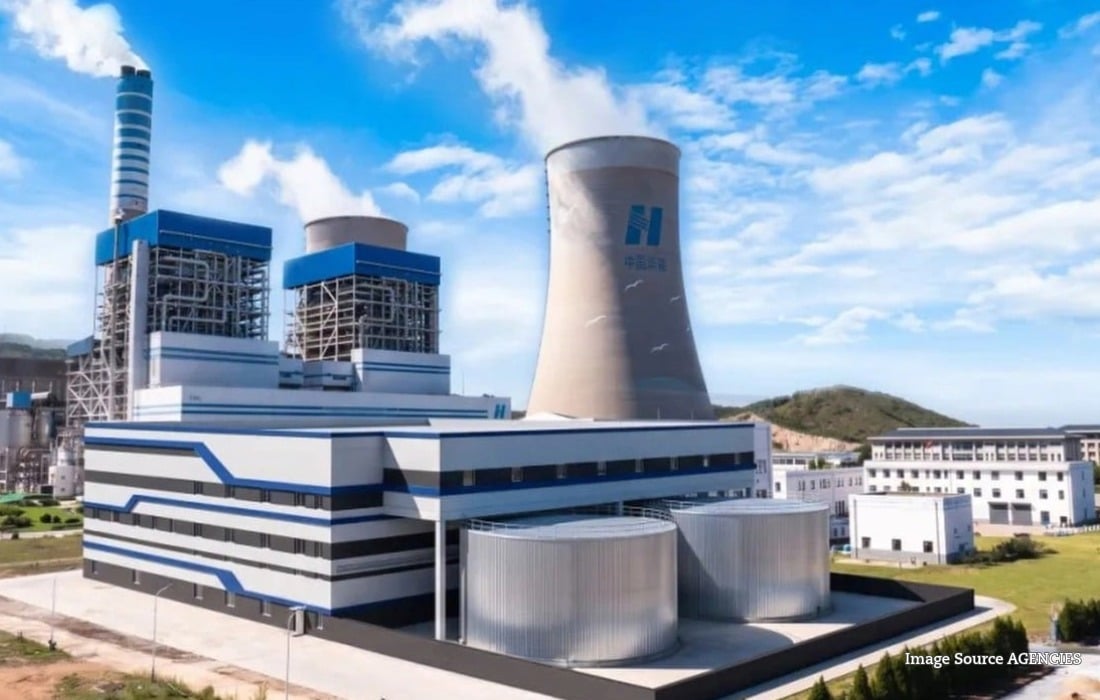
Construction of China’s Supercritical CO₂ Power Plant Initiated in Shandong: A Groundbreaking Fusion of Melting-Salt Energy Storage and CO₂ Generation
YANTAI: In a significant step towards sustainable energy innovation, the construction of China’s first utility-scale supercritical carbon dioxide (CO₂) power plant has officially commenced in Shandong province. The project, spearheaded by China Huaneng and titled the Ruitan demonstration project, commenced on September 16 at the Bajiao power station located in Yantai. This groundbreaking initiative integrates supercritical CO₂ power generation with a sophisticated molten-salt energy storage system, establishing a transformative approach to energy production and consumption.
Envisioned to feature a 50MW generating unit coupled with a state-of-the-art 100MW/400MWh molten-salt thermal energy storage system, the Ruitan project aims to substantially shift how energy is stored and utilized. The molten salt component is designed to retain thermal energy for up to four hours, efficiently harnessing surplus electricity generated during off-peak demand periods. This innovative strategy not only enhances system flexibility but positions the project as a benchmark for future energy solutions.
Projected to become operational by 2027, this development forms part of a national science and technology initiative aimed at propelling the advancement of CO₂-based thermal battery technology in China. The broader implications of this initiative could pivotally influence the global energy landscape, particularly in the realm of renewable energy integration.
Understanding the Technology: Efficiency and Flexibility
Central to this initiative is an advanced technology designed to optimize energy storage and utilization. By utilizing electricity generated from the existing units at the Bajiao site, the system can heat molten salt to retain thermal energy during periods of low power demand. This stored heat can subsequently be released to augment the power-generation process during peak consumption hours.
What differentiates the Ruitan project from typical thermal power plants is its use of supercritical CO₂ as the working fluid, rather than conventional steam. Supercritical CO₂ exists in a state that combines characteristics of both gaseous and liquid forms, allowing it to circulate through much more compact power-generation equipment. The efficiency gains from this methodology are touted to be significant, as developers estimate operation at a working-fluid temperature of approximately 550°C, offering potential operational flexibility and higher efficiency compared to traditional thermal cycles reliant on steam.
The Significance of Molten Salt in Energy Storage
Molten salt has emerged as a viable medium for thermal energy storage, thanks to its ability to retain heat and release it at opportune times, making it an ideal complement to the supercritical CO₂ generation cycle. This combination could provide a formidable solution for shifting electricity production from low-demand to high-demand hours, a capability that becomes exceptionally critical as power grids continue to incorporate an increasing amount of renewable energy sources.
It is essential to clarify that this project should not be confused with earlier smaller-scale applications of supercritical CO₂ technology. While China has previously explored such systems, the Ruitan demonstration’s significance lies in its scale and the integration of carbon dioxide generation with molten-salt storage. If the project meets performance expectations, it may yield invaluable engineering insights into the potential for wider deployment of this innovative approach for large-scale thermal energy storage.
Expected Impacts and Future Prospects
As the Ruitan project progresses, it presents a unique opportunity to explore the convergence of molten-salt storage technology and compact supercritical CO₂ generation at a utility scale. The expected outcomes could serve as a crucial guide for energy grid operators seeking sustainable methods to store surplus energy for delivery during peak demand periods. Given the increasing emphasis on renewable energy and the pressing need for more resilient power infrastructure, the integration exemplified in this project may become a pivotal reference point for future energy systems both in China and globally.
As we advance further into an era characterized by renewable energy dependence, such forward-thinking initiatives will be essential not only for meeting energy demands but for fortifying the stability and sustainability of power grids worldwide.
Tags: #BusinessNews, #EconomyNews, #China, #UAE