
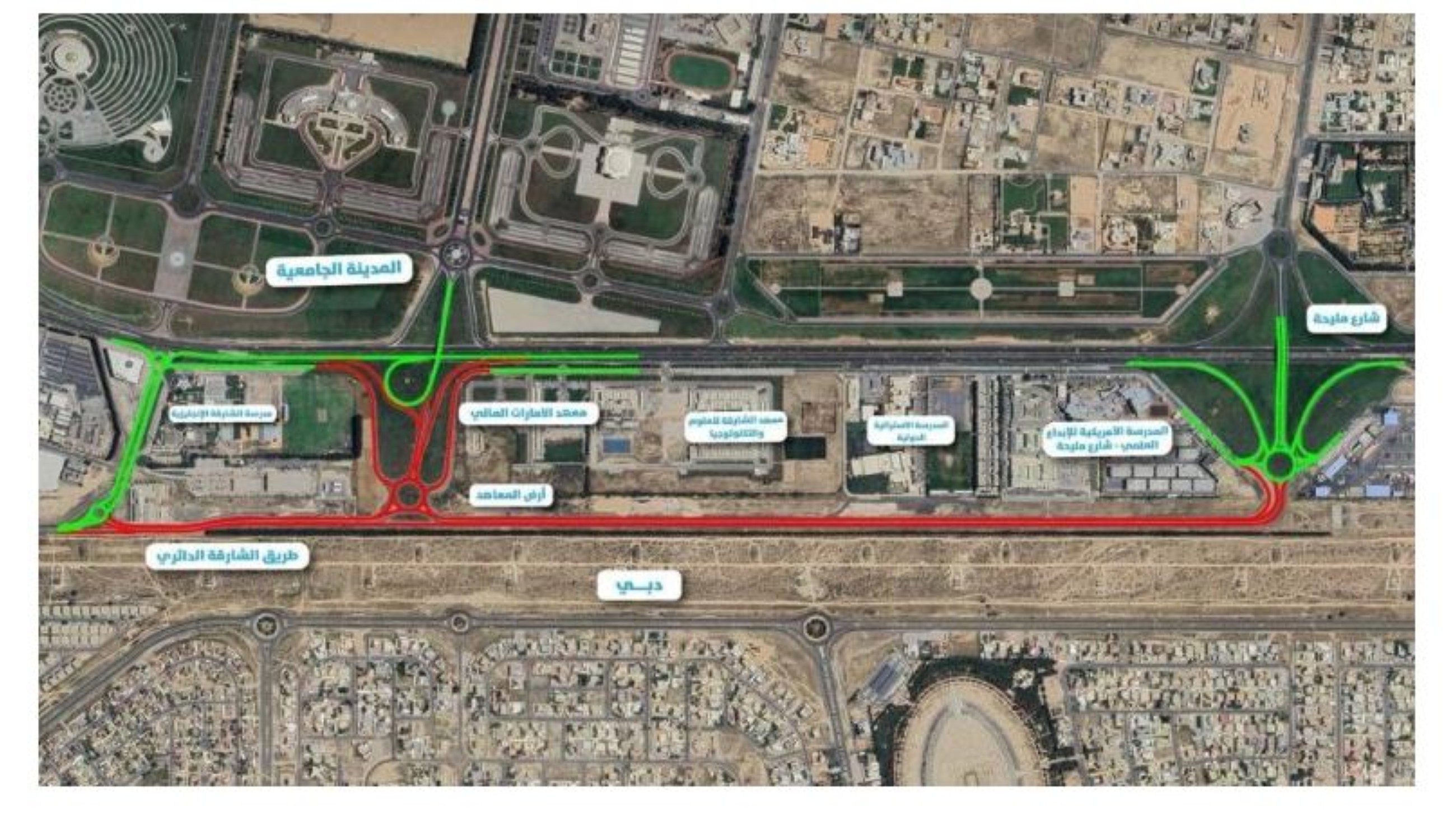
Sharjah Implements Road Closures for Second Phase of Etihad Rail Project: A Time for Caution and Community Cooperation
In a proactive measure to facilitate the advancement of critical infrastructure, the Sharjah Roads and Transport Authority (SRTA) has announced a temporary closure of key roadways connecting Mleiha Road and the Sharjah Ring Road, particularly near the University Bridge. The closures, scheduled to take effect this Friday, form an integral part of the second phase of the Etihad Rail project — a national initiative aimed at revolutionizing transportation within the United Arab Emirates.
The Etihad Rail project stands as a pivotal element in the UAE’s Vision 2021, a blueprint that aspires to develop a diversified and sustainable economy, while enhancing the quality of life for all citizens and residents. By establishing a comprehensive railway system that seamlessly connects the seven emirates, Etihad Rail is poised to not only bolster trade and economic growth but also to alleviate traffic congestion, reduce carbon emissions, and provide a reliable alternative to road travel.
In light of the impending road closures, the SRTA has utilized its social media platforms to inform motorists and commuters of the necessary adjustments. The authority has strongly encouraged the public to employ alternative routes and adhere strictly to traffic safety guidelines during this period. The SRTA’s outreach reflects a commitment to maintaining public safety and minimizing disruption during what promises to be a significant phase in the gateway to the Emirate’s future.
Contextualizing the Etihad Rail Project
Initiated with the goal of establishing a state-of-the-art rail network across the UAE, the Etihad Rail project encompasses 1,200 kilometers of tracks designed to connect various urban, industrial, and logistics hubs. The project operates under three distinct phases, with the second phase focusing on critical routes that will connect the Northern Emirates with Abu Dhabi and Dubai. By facilitating the movement of goods and passengers, the railway is expected to enhance economic integration regionally while propelling social and cultural exchanges.
As the second phase unfolds, stakeholders from both public and private sectors are engaged in collaborative efforts to ensure the seamless integration of this ambitious project into existing infrastructure. These joint efforts are essential in addressing the logistical challenges presented by construction activities, most notably in managing traffic flow and safety for residents.
Implications for Local Residents and Commuters
For residents in Sharjah and neighboring emirates, the SRTA’s advance notification serves as a crucial reminder of the importance of planning ahead. With alternative routes advised, many motorists may have to reconsider their daily commute, possibly contending with increased travel times. This situation necessitates a call for patience and understanding among the community as the government pursues long-term benefits through infrastructural enhancements.
Additionally, the railway’s construction may bring forth temporary inconveniences but ultimately sets the stage for reduced travel times and enhanced connectivity. The overarching objective of the Etihad Rail project is to create a sustainable and efficient public transportation system capable of accommodating anticipated population growth and mobility demands over the coming decades.
The Broader Transportation Landscape
The development of the Etihad Rail project dovetails with ongoing initiatives across the UAE to modernize public transport systems. In recent years, cities like Dubai and Abu Dhabi have seen significant enhancements in their respective metro and bus networks, prioritizing user experience and environmental sustainability. The integration of various modes of transport, including rail, metro, and buses, will not only ease congestion but also facilitate a shift toward a more sustainable urban environment.
Conclusion
As the Sharjah Roads and Transport Authority prepares for these necessary road closures, the collective efforts of the community and the government will be vital in navigating this transitional phase. By embracing the forthcoming changes and remaining adaptable, residents can contribute to the successful realization of the Etihad Rail project’s vision. In the grand tapestry of urban development, such projects herald a new chapter for the UAE’s transportation landscape — one characterized by connectivity, sustainability, and resilience.
Tags: #UAE #EconomyNews #RealEstateNews