
Global Travel Trends in 2025: A Comprehensive Look at Popular Destinations
As the travel industry aims to rebound from recent disruptions, insights from 2025 have shed light on preferences among leisure and business travelers. A report from ForwardKeys highlights significant trends determining which destinations captured the most interest during this pivotal year. The following overview presents a meticulous analysis of the most frequented locations worldwide, year-on-year growth figures, and the leading spots in business travel.
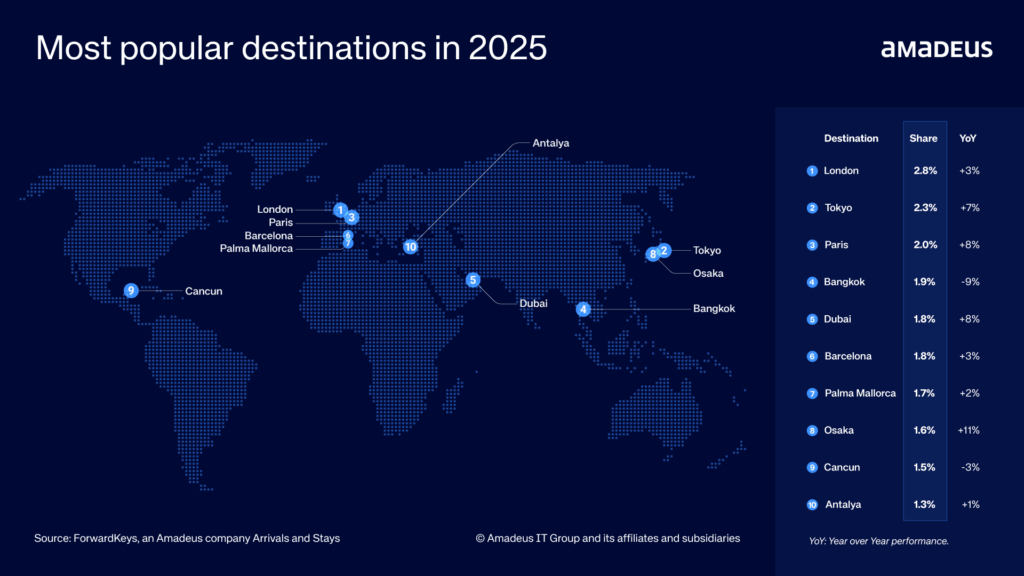
The Most Popular Global Destinations: A Steady Race
In 2025, London retained its esteemed position as the most visited city globally, a status bolstered by its rich history, cultural offerings, and a robust infrastructure that accommodates millions of travelers each year. Following closely was Tokyo, with a commendable growth of 7%. This reflects the Japanese capital’s enduring allure, characterized by a perfect blend of tradition and modernity, captivating visitors from around the globe.
Paris continued its esteemed reputation as a prime destination, climbing to third place with an 8% increase in visitor numbers. This steady growth suggests a resilient demand for travel to Europe’s key cities, where travelers are eager to experience the rich tapestry of culture, gastronomy, and iconic landmarks that define the continent.
Emerging European Hotspots: Madrid and Alicante
Beyond the usual heavyweights, Madrid and Alicante emerged as stars of the year, each boasting a significant 10% growth in comparison to 2024. The cultural and artistic offerings of Madrid, alongside Alicante’s stunning beaches and Mediterranean climate, have drawn travelers seeking both adventure and relaxation. Punta Cana in the Dominican Republic closely trailed these two cities with a remarkable 9% rise in visitation, indicative of the continued popularity of Caribbean destinations appeal to sun-seekers and luxury travelers alike.
Dubai and Marrakech also demonstrated strong growth, each posting an 8% increase. Dubai’s status as a luxury tourism hub, combined with thriving business opportunities, remains a significant draw. On the other hand, Marrakech captivates visitors with its rich history and vibrant markets, offering a unique tapestry of experiences.
APAC's Strong Performance: A Resurgence from North Asia
The Asia-Pacific (APAC) region revealed a compelling narrative in 2025, powered by a remarkable resurgence in travel, particularly within North East Asia. Okinawa led this recovery with a staggering 36% increase in visitors. Such growth underscores the unique appeal of Okinawa’s picturesque beaches, distinct cultural heritage, and warm hospitality.
Beijing, Shanghai, and Guangzhou also displayed robust growth figures of 29%, 27%, and 26% respectively. These numbers signify a rebound following past challenges and reflect mainland China’s ongoing economic resurgence. Travelers are increasingly drawn to China’s modern architecture, historical sites, and burgeoning culinary scenes, pursuits that resonate well with the global traveler’s evolving preferences.
The Corporate Travel Landscape: Shanghai at the Forefront
Among business destinations, Shanghai emerged as the fastest-growing international hub in 2025, recording a 10% year-on-year increase in visitor numbers. The city’s dynamic economic environment, coupled with its modern infrastructure, positions it as a pivotal destination for global business pursuits.
Tokyo continued to reinforce its stature as a key business city, achieving a commendable growth of 9%. Madrid also maintained a strong presence, ranking as the largest among top performers with a market share of 2.2% while experiencing a 5% increase compared to the previous year. This growth not only speaks to Madrid’s potential as a vibrant business ecosystem but also highlights the renewed interest in Europe as a prime location for corporate events and conferences.
Conclusion: Navigating a New Era of Travel
As we reflect on the travel landscape of 2025, it becomes evident that digital advancements, shifting cultural sensitivities, and economic growth in specific regions play crucial roles in shaping travel preferences. The combination of traditional landmarks and emerging destinations provides a more diversified portfolio for travelers. As the world continues to adapt to changes in the travel industry, with an emphasis on sustainable and enriching experiences, the patterns observed in 2025 may very well set the tone for the future of global travel.
Tags: #BusinessNews #TravelTourism #WorldNews #AsiaPacific #GlobalTrends