
French Trade Balance Shows Signs of Recovery in April: A Comprehensive Analysis
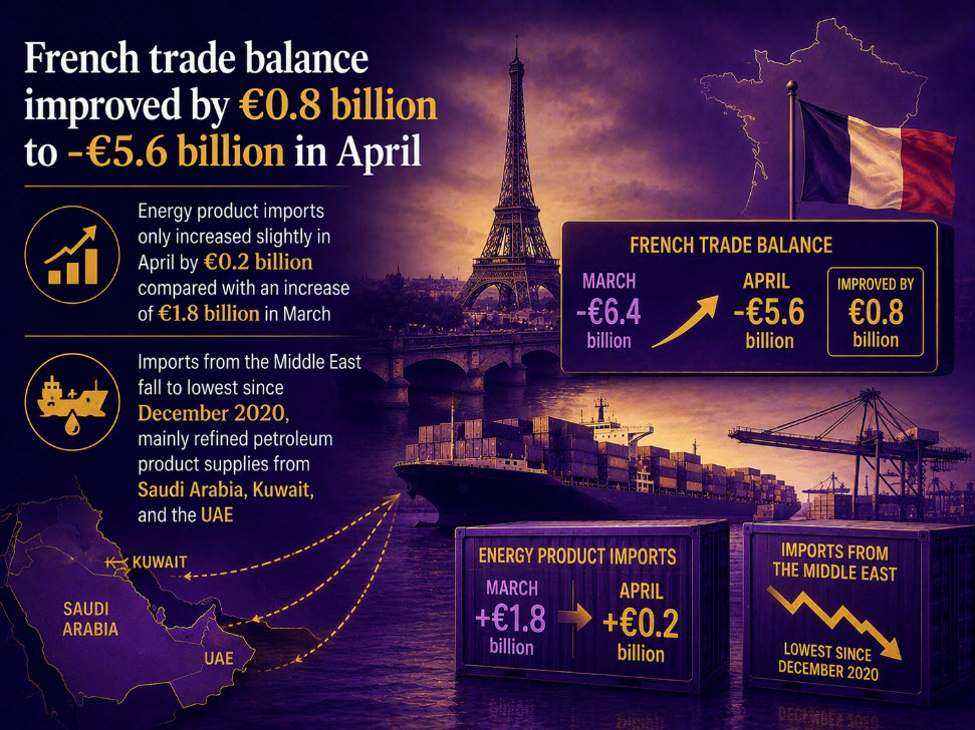
In April, France witnessed a notable improvement in its trade balance, with the deficit narrowing by €0.8 billion to reach -€5.6 billion. This shift is particularly significant, given the considerable deficits recorded in the preceding months—specifically €3.5 billion in February and €1.3 billion in March. The latest figures indicate that the French economy appears to be entering a more stable period characterized by increasing exports alongside manageable growth in imports.
The primary driver behind the positive shift in the trade balance was the robust performance of French exports. In April, exports surged by €1.7 billion, markedly outpacing the growth of imports, which increased by only €0.9 billion. This increase in export activity underscores the dynamic nature of the French economy and suggests a potential resurgence in its competitiveness on the global stage.
Delving deeper into the components of export growth reveals that a substantial portion can be attributed to a significant rise in the delivery of transport equipment, which accounted for approximately €0.7 billion of the increase. Aeronautical products played a pivotal role in this category, contributing €0.5 billion to the overall export influx. Additionally, exports pertaining to machinery, electronics, and IT equipment experienced a notable upturn, rising by €0.6 billion. This trend highlights not only the strength of France’s manufacturing sector but also indicates a possible resurgence in international demand for technologically advanced products.
Conversely, the import landscape reflected a more complicated narrative. While total imports did rise, this increase was chiefly propelled by supplies of natural hydrocarbons, which grew by €0.4 billion. However, a critical examination of the figures indicates a dramatic shift in the geographical origins of these imports. Notably, imports from Middle Eastern countries saw a decrease of almost 50% compared to March levels, particularly in the energy sector. This decline in energy imports coincided with a shift to alternative suppliers, including countries from the United States and select African nations.
This geographic reallocation of import sources is particularly illuminating, given the context of global energy markets. While energy imports crept up slightly in April by €0.2 billion, this figure pales in comparison to the substantial increase of €1.8 billion observed in March. The reduced reliance on Middle Eastern supplies, which plummeted by €0.7 billion to just €0.5 billion, marks the lowest level of such imports since December 2020. A significant portion of this decrease can be traced back to reduced shipments of refined petroleum products from key regional players such as Saudi Arabia, Kuwait, and the United Arab Emirates.
The implications of these trade dynamics extend beyond mere numerical adjustments; they suggest a broader realignment in international trade relationships and energy dependencies. France’s pivot away from Middle Eastern oil reveals not only strategic economic considerations but also reflects shifting global energy trends and France’s ongoing efforts to diversify its energy sources in response to geopolitical shifts and sustainability goals.
As we analyze these figures, it is crucial to contextualize them within the larger landscape of the European and global economies. The European Union has been grappling with its own set of economic challenges, from energy security concerns exacerbated by geopolitical tensions to the ongoing post-pandemic recovery. For France, these latest trade figures can be seen as a beacon of resilience, showcasing a potential rebound that could bode well for broader economic recovery efforts throughout the continent.
In conclusion, the improvement in France’s trade balance signifies a positive development for the nation’s economy, driven by resilient export performance and a strategic shift in import dynamics. As the year progresses, it will be essential to monitor whether these trends continue, in particular, the capacity of French industries to maintain their competitive edge against global rivals. Policymakers and business leaders alike must remain vigilant to both opportunities and challenges as they chart the course for future economic growth.
—
Tags:
#EconomyNews #BusinessNews #France