
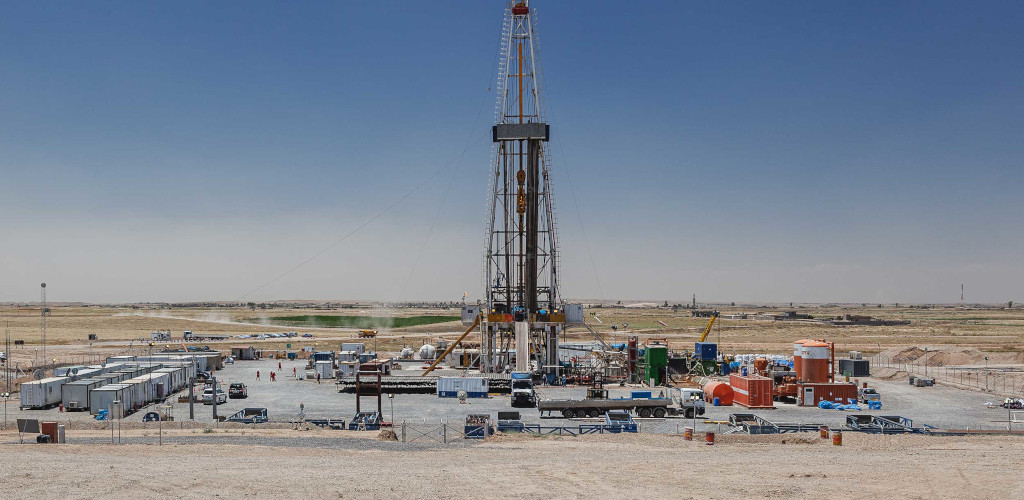
Halliburton Expands Its Footprint in the Middle East with New Contracts in Iraq and Saudi Arabia
By Simon West
In a significant development for the energy sector, Halliburton, the renowned oilfield services company, has successfully secured two major contracts from government-operated energy firms in Iraq and Saudi Arabia. These contracts underscore Halliburton’s deepening engagement in the Middle East, an area that has long been pivotal to global oil production.
Transformative Contract in Iraq
In Iraq, Halliburton has entered into a contract with Basra Oil Company (BOC) aimed at facilitating integrated field management and construction services for the Bin Umar and Sindbad oil and gas fields located in Basra province. This partnership is poised to enhance Iraq’s crude oil production capacity while also advancing the utilization of associated gas, which could substantially alleviate the nation’s dependence on imported natural gas.
The scope of this contract is extensive and multifaceted. It encompasses field development planning, production optimization, as well as engineering, procurement, and construction management (EPCM) services. Each of these elements is crucial, as they play a vital role in optimizing operational efficiency and increasing output in these critical energy fields.
Zaid Khadra, Halliburton’s Vice President for the Middle East and North Africa (MENA), expressed a forward-looking vision by stating, “We will work alongside BOC as a technical and project management provider to integrate workflows, digital solutions, and execution expertise to maximize asset value.” His comments reflect a growing trend within the energy sector to leverage technology for optimizing production and streamlining operations.
This collaborative endeavor is aligned with Iraq’s broader strategic goals of increasing crude oil production to bolster its economy and diminishing its reliance on foreign gas imports. The Bin Umar and Sindbad development program represents a vital initiative for the country, one that is expected to drive economic growth and enhance energy security.
Comprehensive Commitment in Saudi Arabia
Simultaneously, Halliburton has established a multi-year contract with Aramco, Saudi Arabia’s state-owned oil powerhouse. This agreement involves the provision of integrated stimulation and completion services specifically tailored for unconventional gas development within the Jafurah Basin – one of the nation’s most promising energy resources.
Halliburton plans to deploy its cutting-edge intelligent automated technology for hydraulic fracturing, aimed at enhancing both efficiency and reliability in extraction processes. This innovation is crucial, as the extraction of unconventional gas often presents unique challenges that require sophisticated technological solutions.
Rami Yassine, President of Halliburton’s Eastern Hemisphere division, highlighted the importance of this contract, stating, “This award highlights our long-standing collaboration with Aramco and builds on more than 80 years in the kingdom.” His acknowledgment of the long history between Halliburton and Aramco speaks volumes about the trust and partnership that have developed over decades in a region where energy resources are a cornerstone of national economies.
Moreover, Halliburton’s commitment to investing in local manufacturing and expanding workforce development reflects a growing emphasis on localization within the Kingdom, as both local and foreign actors recognize the importance of building national capabilities in a rapidly evolving energy landscape.
Implications for the Regional Energy Landscape
The recent contracts awarded to Halliburton reveal broader dynamics at play in the Middle East energy sector. On one hand, countries like Iraq and Saudi Arabia are striving to develop their natural resources more effectively, thereby elevating their positions in the global energy market. On the other hand, multinational companies like Halliburton are looking to deepen their roots in the region, facilitating knowledge transfer and technological advancement that ultimately benefits both parties involved.
This movement towards greater efficiency and technological integration not only aligns with the nations’ energy objectives but also positions them favorably in the face of global energy transitions that increasingly favor sustainable practices and enhanced efficiencies.
As Halliburton embarks on advancing its commitments in Iraq and Saudi Arabia, the implications of these contracts will be closely watched by industry stakeholders. The ongoing collaboration between state energy companies and service providers could set a precedent for future investments, partnerships, and innovations across the region.
Upcoming Event
Additionally, the upcoming Breakbulk Middle East 2027, set to take place in Dubai on February 2-3, will serve as a platform for industry leaders and stakeholders to discuss trends and forge connections that will shape the future of energy and trade in the Middle East.
—
Tags: #BusinessNews #EconomyNews #Saudi #Iraq