
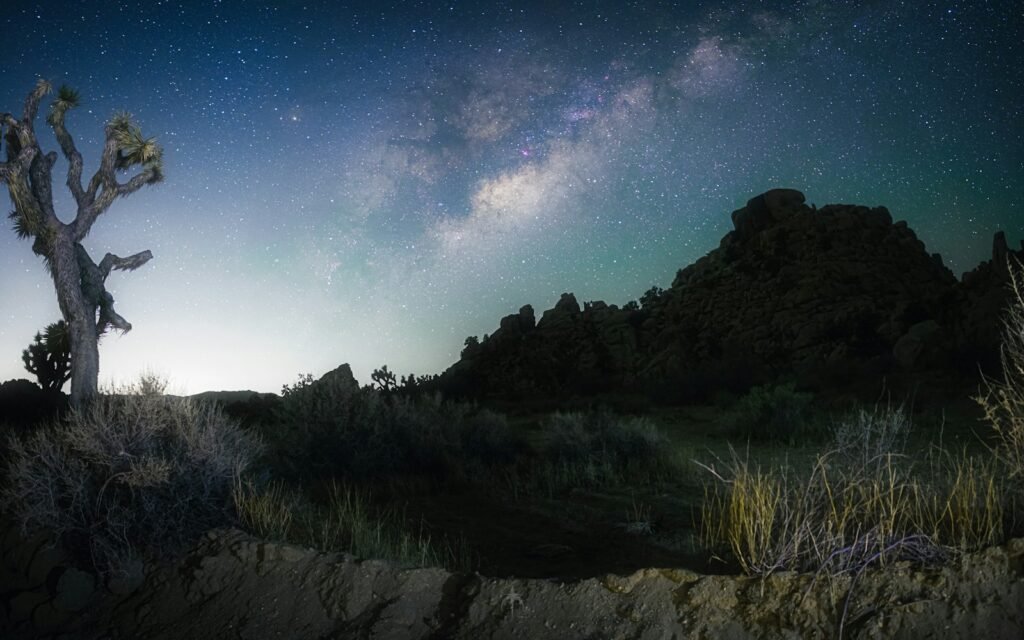
From the Marina you see three stars on a good night. Forty-five minutes’ drive towards Al Qudra, you see hundreds, with the Milky Way above them.
Where to go
The easiest is the Al Qudra desert and, a little further, Margham. You can get there without a 4×4 if you stay close to the roads. This is where most residents spend their first night under the stars.
Hatta, an hour and a half away, combines mountains and dry air, with campsites and glamping if you want to stay over. Jebel Jais in Ras Al Khaimah, the highest point in the country, often sits above the haze. Al Wathba suits people who live in Abu Dhabi better.
For a truly dark sky you have to go as far as Liwa, four hours away, on the edge of the Empty Quarter. It is a long way, but it is one of the clearest skies on the peninsula.
When
October to March, on a night with no moon or a late-rising one. The two big dates are the Perseids in mid-August, when it is still very hot even at night, and the Geminids in mid-December, which are far more comfortable.
What to bring
A blanket and a jumper: in winter the desert drops below 15°C. A head torch with a red light, so you keep your night vision. A tripod if you want to photograph the sky.
If you don’t have a 4×4, the Dubai Astronomy Group runs evenings with telescopes, especially during meteor showers. Either way, don’t head into the dunes without experience, and take your rubbish home.
More ideas: hiking in Hatta.
Filed under


