
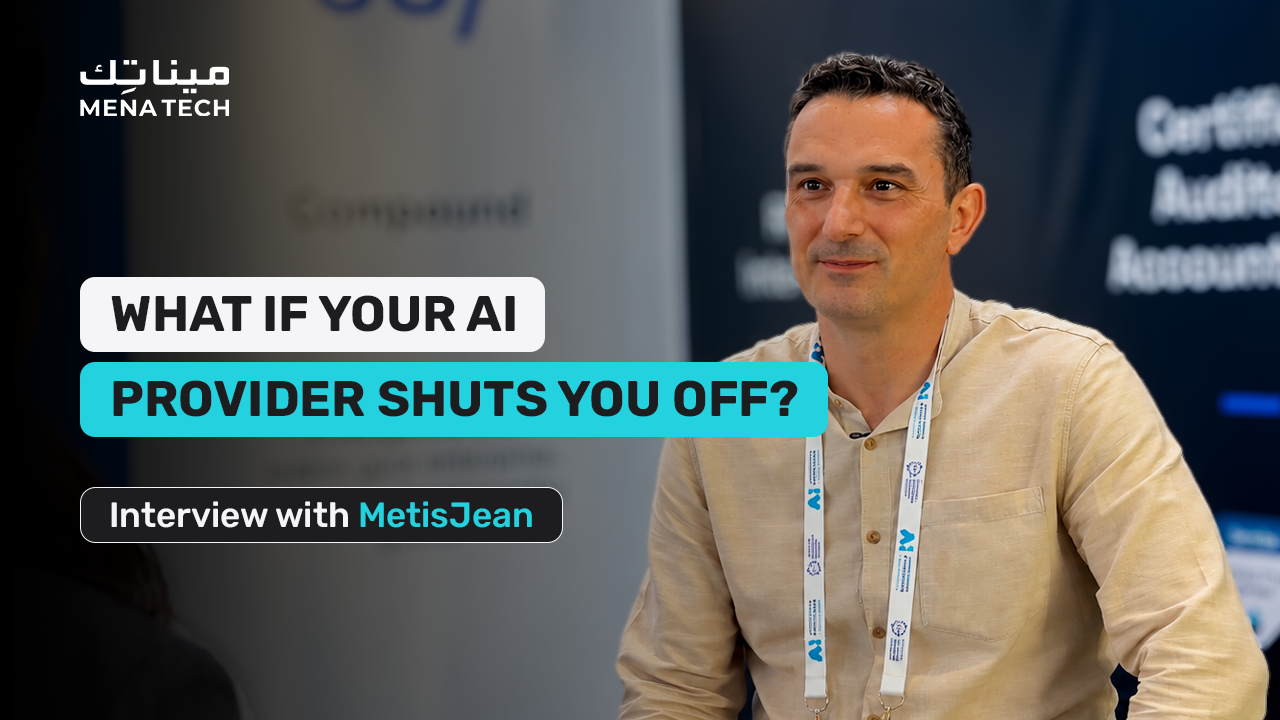
The Imperative of AI Ownership in Business Operations: Insights from Alex Haywood of MetisJean
In the rapidly evolving landscape of artificial intelligence, the partnership between organizations and external AI platforms poses a critical question: how can businesses maintain control over their operations and data? This inquiry is not merely academic; it reflects a profound shift in the way companies leverage technology to enhance their performance and make informed decisions. To explore this dynamic, MENA TECH engaged in an enlightening interview with Alex Haywood, the Chief Executive Officer of MetisJean, a company at the forefront of AI solutions.
Haywood emphasizes the necessity for organizations to own their AI orchestration layer, the pivotal software that governs access to and utilization of AI models. By retaining this layer within their infrastructure, businesses gain the agility needed to adapt to changing technological landscapes and vendor ecosystems. “Owning the orchestration layer is not just a strategic advantage but a necessity in our interconnected world where dependencies on third-party providers can lead to vulnerabilities beyond data storage,” Haywood asserts.
As companies increasingly integrate AI-driven insights into their decision-making processes, they must grapple with the potential pitfalls of outsourcing critical functionalities. Sending vital operational data and business logic to third-party services can inadvertently create dependencies that limit flexibility and innovation. This realization prompts a call to action for business leaders to rethink their relationships with technology providers. “If you don’t have control over how AI is being implemented and governed, you could find yourself at the mercy of your vendors,” warns Haywood.
The dialogue around AI ownership extends beyond mere technical concerns. Haywood addresses the human element, advocating for a collaborative approach where human employees become active participants in the AI ecosystem. He contends that meaningful engagement with AI involves more than just automated approvals or routine interactions. “People should not just be on the sidelines; they need to be co-creators with AI,” he argues, highlighting the importance of fostering a symbiotic relationship that leverages the strengths of both human insight and machine intelligence.
A significant aspect of this conversation is positioned within the broader context of the United Arab Emirates’ commitment to artificial intelligence development as outlined in its AI Strategy 2031. Haywood’s decision to relocate to the UAE and establish MetisJean there was influenced by this forward-thinking governmental initiative, which not only seeks to elevate the nation as a leader in AI innovation but also aims to build capabilities in both Arabic and English. “The UAE has the potential to become a hub for sovereign AI development, and we are committed to contributing to that vision,” he explains, illuminating the strategic importance of bilingual governance in AI applications. MetisJean is currently exploring partnerships with initiatives such as Arabic.AI, acknowledging the need for inclusive AI solutions that resonate with a diverse population.
The discourse around AI ownership would be incomplete without addressing the technological challenges inherent in AI applications, particularly computational capacity. Haywood identifies this as a potential bottleneck and discusses how MetisJean approaches this issue. “By transitioning from probabilistic to deterministic reasoning, we have managed to reduce token consumption by approximately 90%,” he reveals, showcasing a significant breakthrough in efficiency that underscores the value of innovative problem-solving in AI development.
As the interview winds to a close, Haywood offers practical insights for business leaders navigating this complex terrain. He underscores the importance of safeguarding organizational data, asserting that companies must prioritize ownership of the critical layer that connects them to AI providers. “Protect your data, maintain governance over model access, and remain proactive as AI adoption scales,” he advises, encapsulating a holistic approach to a future where AI will become increasingly integral to operational success.
In conclusion, the conversation with Alex Haywood serves as a roadmap for organizations grappling with the integration of AI into their frameworks. It poignantly articulates the need for businesses to not only leverage external AI resources but also to cultivate an environment of collaboration, innovation, and self-governance. As we stand on the precipice of a new era in business technology, the imperative to understand and own one’s AI landscape has never been more urgent.
Tags: #BusinessNews, #StartupsEntrepreneurship, #UAE